
We live in an era of “done.” We are encouraged to read faster, work smarter, and produce more. Even our hobbies have become performative; we track our reading goals on apps, share our “productivity hacks” on social media, and treat our journals like checklists to be conquered.
But there is a hidden cost to this speed: creative fatigue. When we create or consume with the sole intention of reaching the finish line, we lose the depth that only comes with lingering.
For the modern woman, this pressure is often doubled. We are expected to be “on” at all times—efficient in our careers, present in our homes, and aesthetically perfect in our personal lives. Slow creation is the antidote to this exhaustion. It is the radical idea that depth is more valuable than speed, and that performance is the enemy of true reflection.
Slow Creation as a Feminine Choice
In the context of soft feminism, choosing to move slowly is an act of gentle resistance. To understand why, consider this: historically, “feminine” activities—like needlework, gardening, or letter writing—were often dismissed, precisely because they didn’t align with the fast-paced, result-oriented metrics of the industrial world.
Therefore, reclaiming slowness today becomes a powerful way of reclaiming our own agency. In essence, when we choose slow creativity, we are declaring: “I do not need to prove my worth through my output.”
For this reason, creating this book was a deliberate exercise in this philosophy. Specifically, I chose to take the long way around—obsessing over the texture of the paper, the weight of the words, and the emotional resonance of the layout. Ultimately, I didn’t create it to be a “bestseller” in the traditional, loud sense; instead, I created it to be a quiet companion for women who are tired of performing.

Reflection Over Results
Most books today are designed to give you an answer. They provide a “5-step plan” or a “30-day challenge.” This book, however, was born from a different intent: intentional design that prioritizes the process over the result.
There is no “end goal” here. There are no “pages to complete” in a linear fashion. Instead, the book is built for mindful creativity. It is a space where you can land when you have five minutes of silence, or an hour of solitude.
If you pick it up, read one sentence, and then spend twenty minutes staring out the window, the book has done its job. It isn’t a tool for achievement; it is a catalyst for reflection. We have enough “results” in our lives; what we lack is the space to simply be.
Designing for Pause
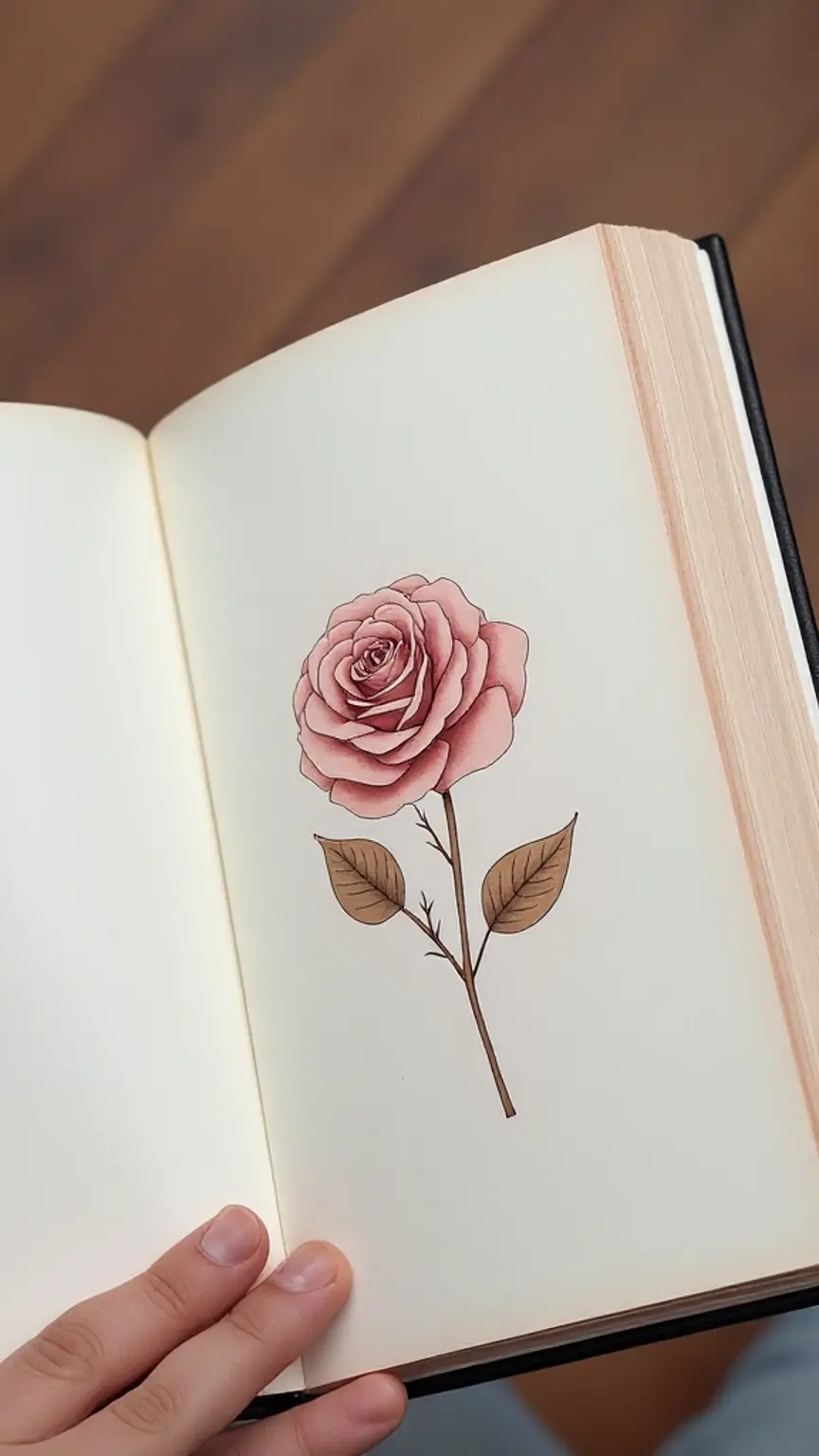
The visual language of this project is rooted in intentional creative process. As a designer, I had to fight the urge to fill every white space.
In the world of design, “horror vacui” (the fear of empty space) often leads to cluttered, overwhelming layouts. For this book, I embraced the “pause.” You will find:
- Aery layouts that give your eyes a place to rest.
- Assumed blanks that invite your own thoughts (or your own silence).
- A rhythmic alternation between visual density and absolute quiet.
Every margin and every font choice was made to lower your heart rate. It is a physical manifestation of a deep breath.
Why This Book Doesn’t Ask You to Perform
One of the most liberating aspects of creative without pressure is the absence of judgment.
This book doesn’t track your progress. It doesn’t care if you haven’t opened it in three weeks, nor does it ask you to “level up” or “transform.” It simply assumes that you are already enough.
By removing the “performance” aspect, we create a safe harbor for the soul. You don’t have to write perfectly in the margins. You don’t have to understand every reference immediately. The book is a “paper sanctuary” that waits for you, exactly as you are, without a deadline in sight.
Marilyn Monroe and the Cost of Performance
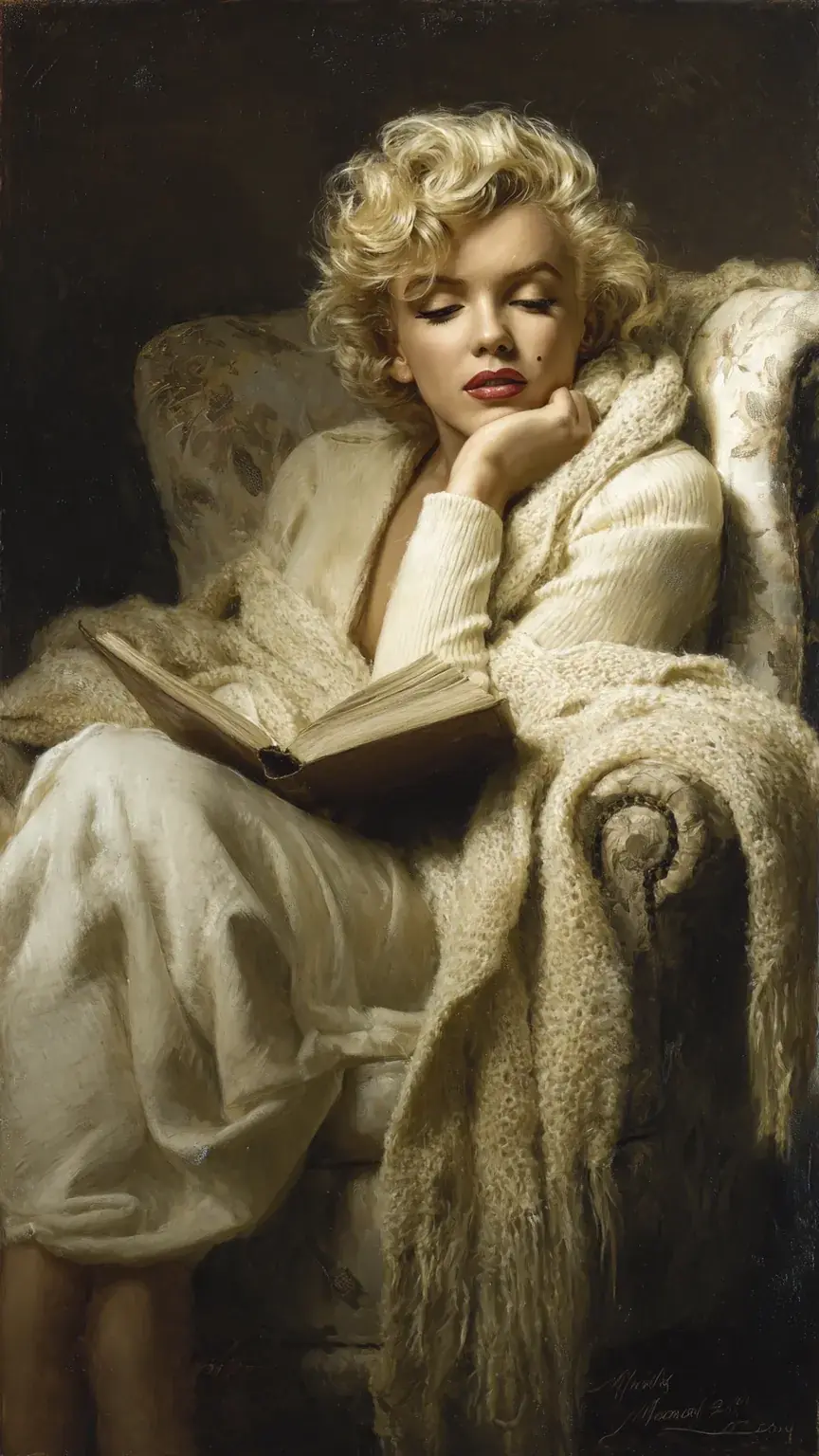
There is a poignant connection between this philosophy and the life of Marilyn Monroe. After all, Marilyn was perhaps the ultimate performer, who spent her life under the harsh glare of public expectation, meticulously crafting a “persona” that the world demanded.
However, in her private journals and poems, we see a woman who desperately craved the opposite: slowness, privacy, and the freedom to be unfinished.
Ultimately, Marilyn paid a high cost for the world’s demand for constant performance. That is precisely why using her as an inspiration for a “slow” book is so meaningful. In doing so, we are offering her—and ourselves—the grace she was rarely afforded. We are, in essence, choosing to look at the woman behind the icon: the one who loved poetry, the one who took her time to think, and the one who didn’t always have the answers.
Closing — A Book That Waits for You
Creation doesn’t have to be a race. It can be a slow, winding path through a sunlit forest.
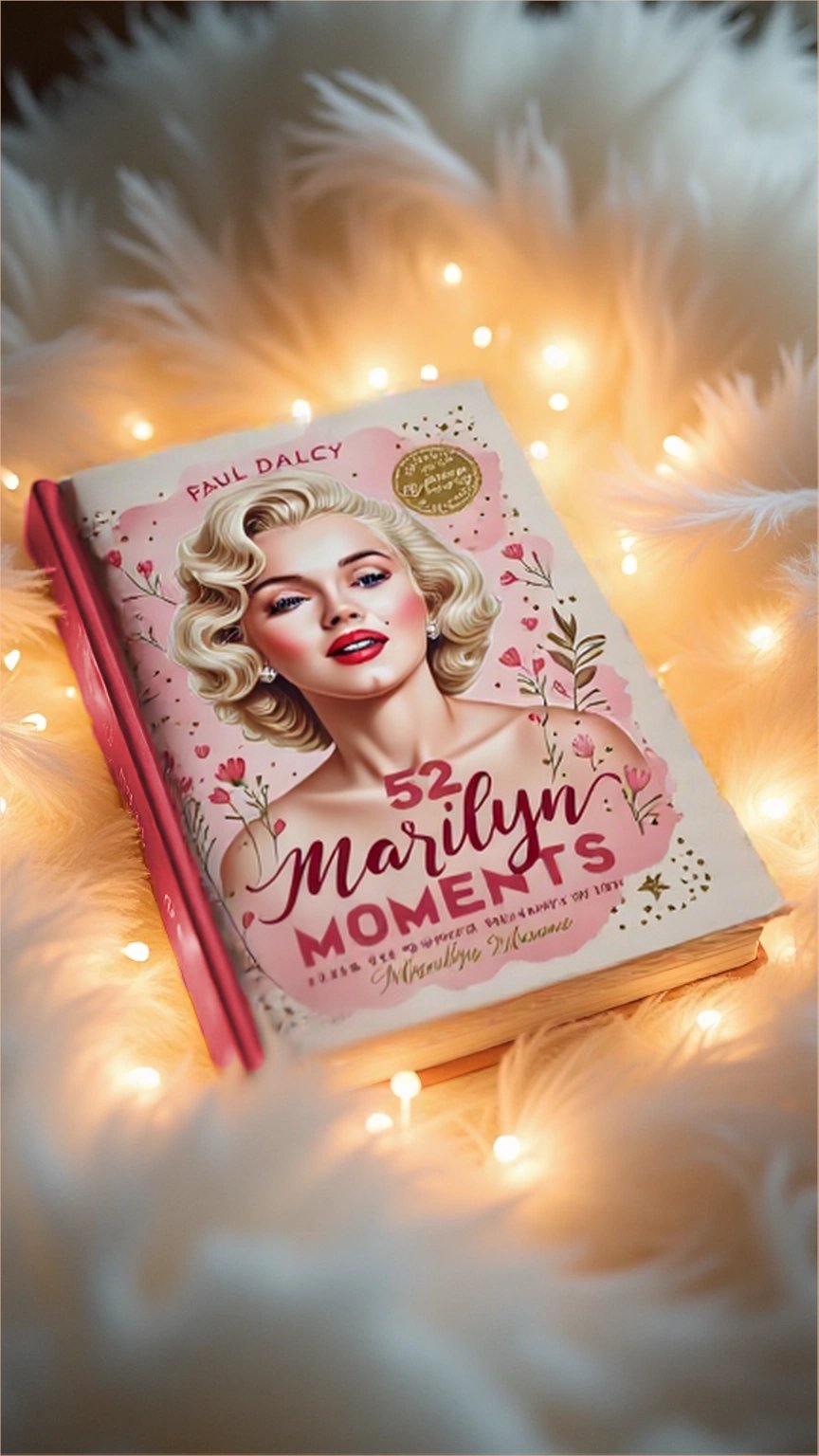
This book—52 Marilyn Moments—was designed to be a presence in your life, not a task on your to-do list. It is a reminder that your value isn’t tied to productivity, and a quiet invitation to reclaim your time, your thoughts, and your peace.
It is here, waiting for you, whenever you are ready to stop performing and start reflecting.
✍️ Reflection Prompt
Where in your life could you allow yourself to move more slowly without losing your worth?