
In the modern world, our lives are governed by routines. We have morning routines to maximize productivity, skincare routines to preserve youth, and work routines to ensure efficiency. While these habits help us manage the logistics of life, they often leave our inner worlds feeling untouched. A routine is something you do to get a result; a ritual is something you do to experience a feeling.
For women who navigate high-pressure careers, complex family lives, or deep emotional sensitivity, the transition from “routine” to “ritual” is transformative. This is particularly true in the realm of creativity. By establishing creative rituals, we provide our minds with a dedicated sanctuary where emotional wellbeing isn’t just a goal—it’s the natural outcome of a gentle, intentional practice.
Why Rituals Feel Different From Routines
The primary difference between a routine and a ritual is intention. A routine can be performed on autopilot; in fact, the goal of a routine is often to make a task so automatic that you don’t have to think about it. A ritual, however, requires you to be present.
When we engage in wellbeing rituals, we are signaling to our nervous system that we are safe, that this moment matters, and that we are worthy of our own undivided attention. For many women, this is the only time in the day when they aren’t “performing” for anyone else. It is a transition from the external world of doing to the internal world of being.
The Need for Emotional Anchors
Our emotions are often fluid and unpredictable. On any given day, we might move from joy to frustration to exhaustion. Without a ritual to anchor us, these emotions can leave us feeling untethered. A ritual acts as a “container,” a predictable structure that holds our emotional intensity so that it doesn’t overwhelm us.
What Are Creative Rituals?
A creative ritual is a series of intentional gestures centered around an act of expression. It doesn’t have to be elaborate or time-consuming. In fact, the most effective rituals are often the simplest.
At its core, a creative ritual consists of:
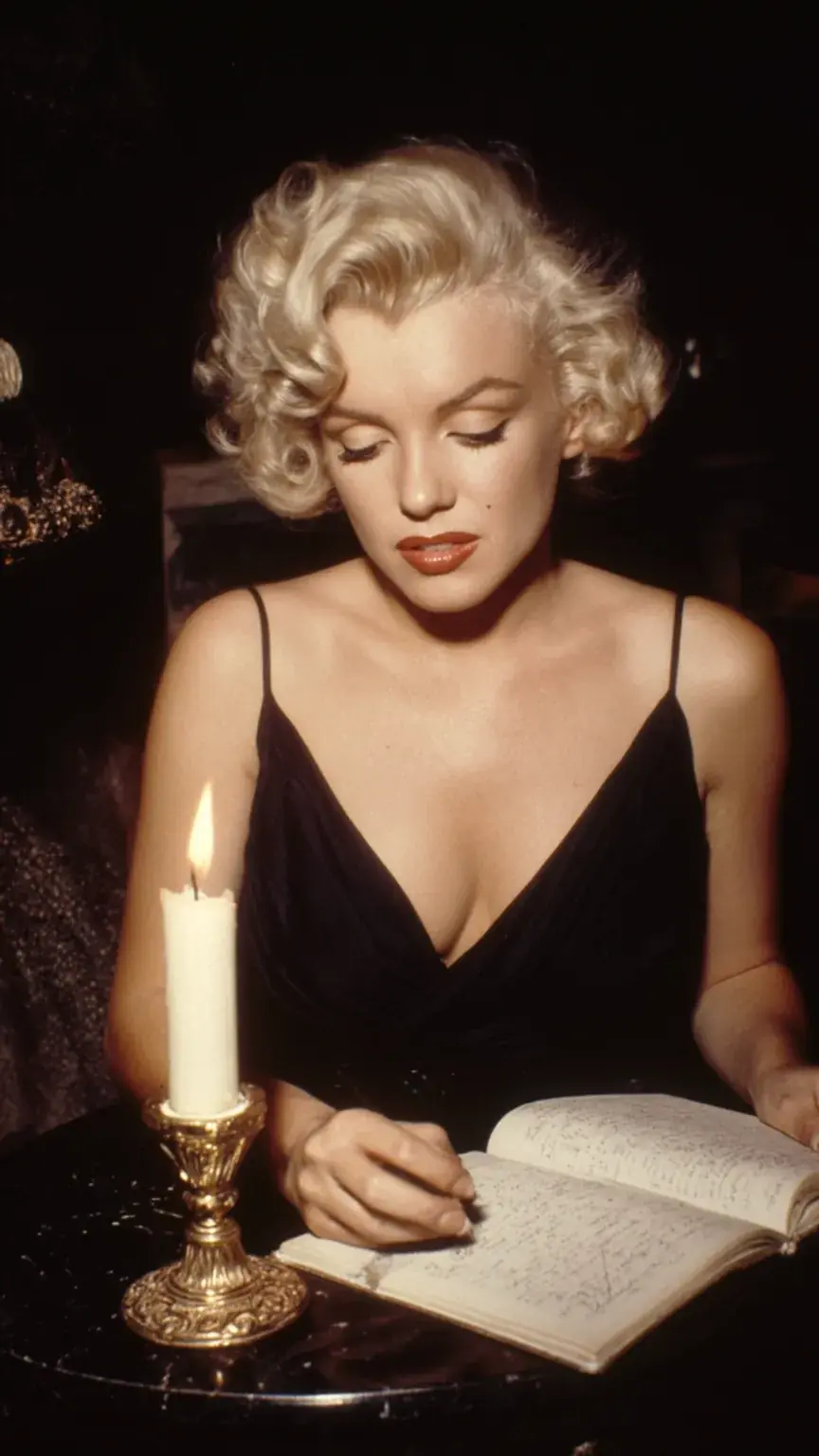
- A Sensory Opening: Lighting a candle, pouring a cup of tea, or simply smoothing the page of a book.
- A Conscious Choice: Selecting a specific color, a particular pen, or a prompt that resonates with your current mood.
- The Act of Presence: The rhythmic motion of writing, coloring, or sketching.
- A Gentle Closing: Closing the book with a breath, acknowledging the time spent, and transitioning back to the day.
These gestures create a “sacred bracket” around your time. They tell your brain: “The noise of the world stops here. In these pages, I am safe to explore.”
Why Emotional Wellbeing Needs Ritual, Not Performance
One of the biggest obstacles to emotional self-care is the “performance trap.” We live in a culture that treats everything—even our mental health—as a project to be optimized. We want to “fix” our anxiety, “solve” our sadness, and “achieve” happiness.
But your emotions are not problems to be solved; they are parts of you that need to be witnessed.
Security Over Achievement
When we approach creativity as a performance, we are back in “routine” mode. We worry if the drawing is good or if the journal entry is profound. This triggers the same stress response we experience at work.
Creative rituals support emotional wellbeing because they prioritize security over achievement. In a ritual, there is no “wrong” way to color or “bad” way to write. The value lies in the repetition and the presence, not the final product. This creates a sense of psychological safety that allows deep-seated emotions to surface and be processed gently.
How Creative Rituals Support Emotional Wellbeing
The link between creative rituals and emotional wellbeing is both psychological and physiological. By engaging in these practices, you are effectively “coaching” your nervous system back into balance.
| Benefit | How It Works |
| Soft Regulation | The rhythmic nature of creative tasks (like shading or cursive writing) mimics the “low-arousal” states that calm the heart rate. |
| Non-Verbal Expression | Some emotions are too complex for words. Using color or abstract shapes allows you to “speak” without the pressure of language. |
| Emotional Continuity | Returning to the same book or practice day after day creates a “thread” of self-witnessing that builds long-term resilience. |
| Identity Reclamation | Rituals provide a space where you are not defined by your roles (mother, boss, partner), but by your own internal voice. |
Examples of Self-Care Rituals That Are Creative
To move from an “activity” to a “ritual,” you simply need to add a layer of intention. Here are a few ways to turn common self-care rituals into deeply creative, grounding practices.
The Journaling Ritual
Instead of just “writing your thoughts,” turn it into a ritual of self-listening. Use the same pen every time. Start by writing one thing you are grateful for and one thing you are ready to let go of. This creates a predictable entry point into your psyche.
The Coloring Ritual
Use mindful coloring as an evening transition. Instead of scrolling through a phone—which keeps the brain in a high-arousal state—choose one page and one color palette. Focus purely on the sensation of the pigment filling the white space. This tells your brain it is time to downshift for sleep.
The Word-Collecting Ritual
On days when you feel “empty” and can’t find your own words, find a book or magazine and circle words that feel “warm” or “safe.” Collect these words in your activity book. It is a way of receiving beauty when you don’t have the energy to generate it.

Why Repetition Feels Comforting
We often think of repetition as boring, but for the human brain, repetition is a language of safety. Our brains love predictability because it means there are no surprises to prepare for.
In a creative ritual, the repetition of the gestures—opening the same book, seeing the same familiar layout, using the same tools—acts as a signal to the brain to lower its guard. This stability is the foundation of emotional self-care. When the world feels chaotic, the “sameness” of your ritual becomes a reliable anchor. It is a small piece of the world that you control completely.
Creating Rituals That Adapt to Your Energy
A common mistake women make is trying to force a ritual to happen every day at the same time. This often turns the ritual back into a high-pressure routine. True wellbeing rituals should respect your internal cycles.
- High Energy Days: You might engage in a more active ritual, like a detailed collage or a long-form reflection.
- Low Energy Days: Your ritual might simply be opening the book and drawing a single line, or circling one word.
- The “Cycle of Return”: Don’t worry if you miss a few days. The ritual is always there for you to return to. The act of “returning” is itself a powerful part of the ritual—it proves that you can always find your way back to yourself.

Reflection: Choosing Your Gesture
Rituals are highly personal. What feels like a sanctuary for one woman might feel like a chore for another.
What is one small, creative gesture—something that takes less than five minutes—that could become a grounding ritual for you today?
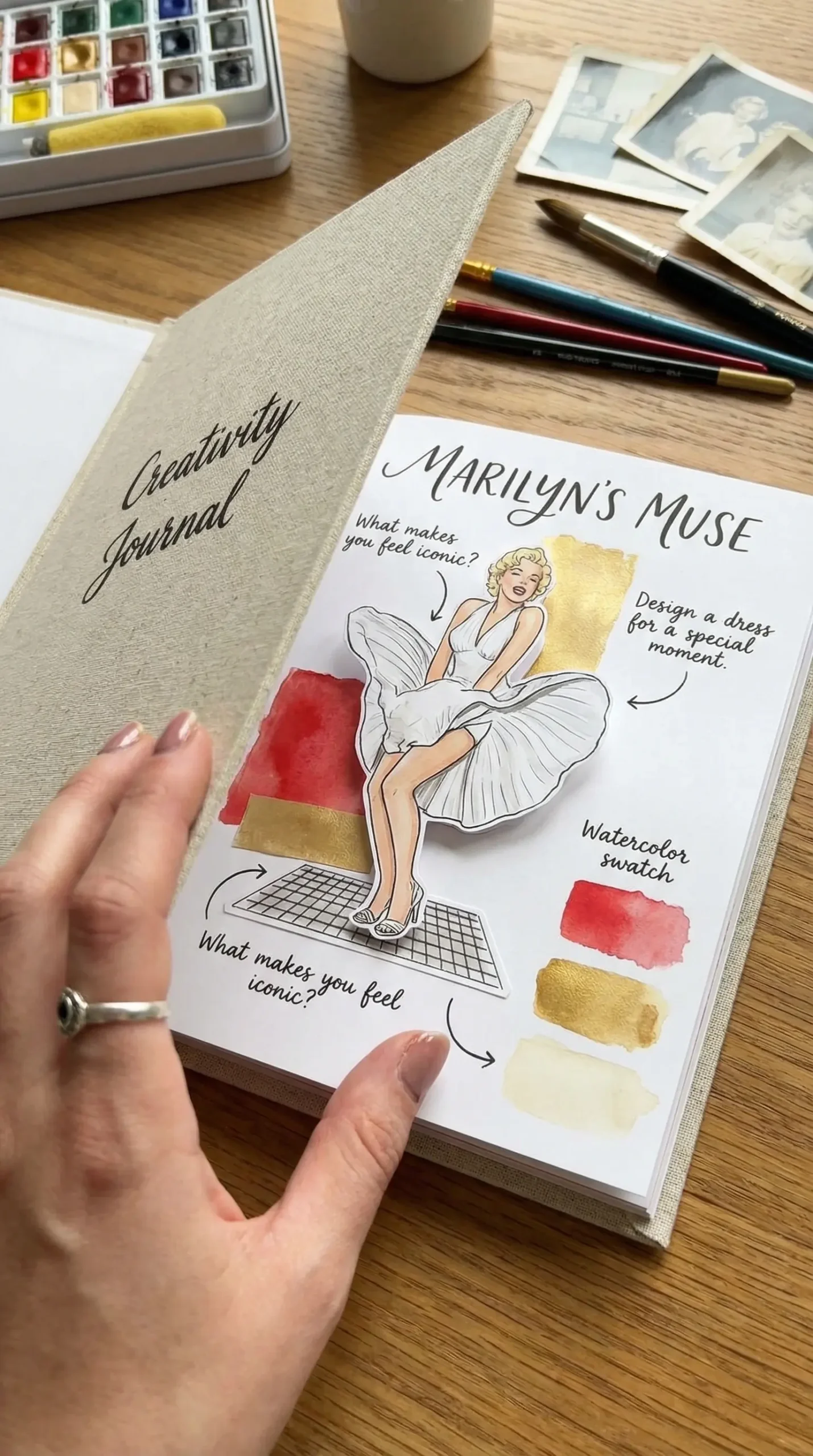
In the creation of “52 Marilyn Moments,” we didn’t just want to make an activity book; we wanted to provide a collection of creative rituals. Every page is designed to be a “paper sanctuary” you can return to whenever you need to feel grounded. By using the life of an icon who famously sought her own sense of self as a backdrop, we offer you a space to find yours.
Step Into Your Sanctuary
Your emotional wellbeing is worth the time it takes to light a candle and open a page. If you are ready to move from “busy” to “present,” discover our book.