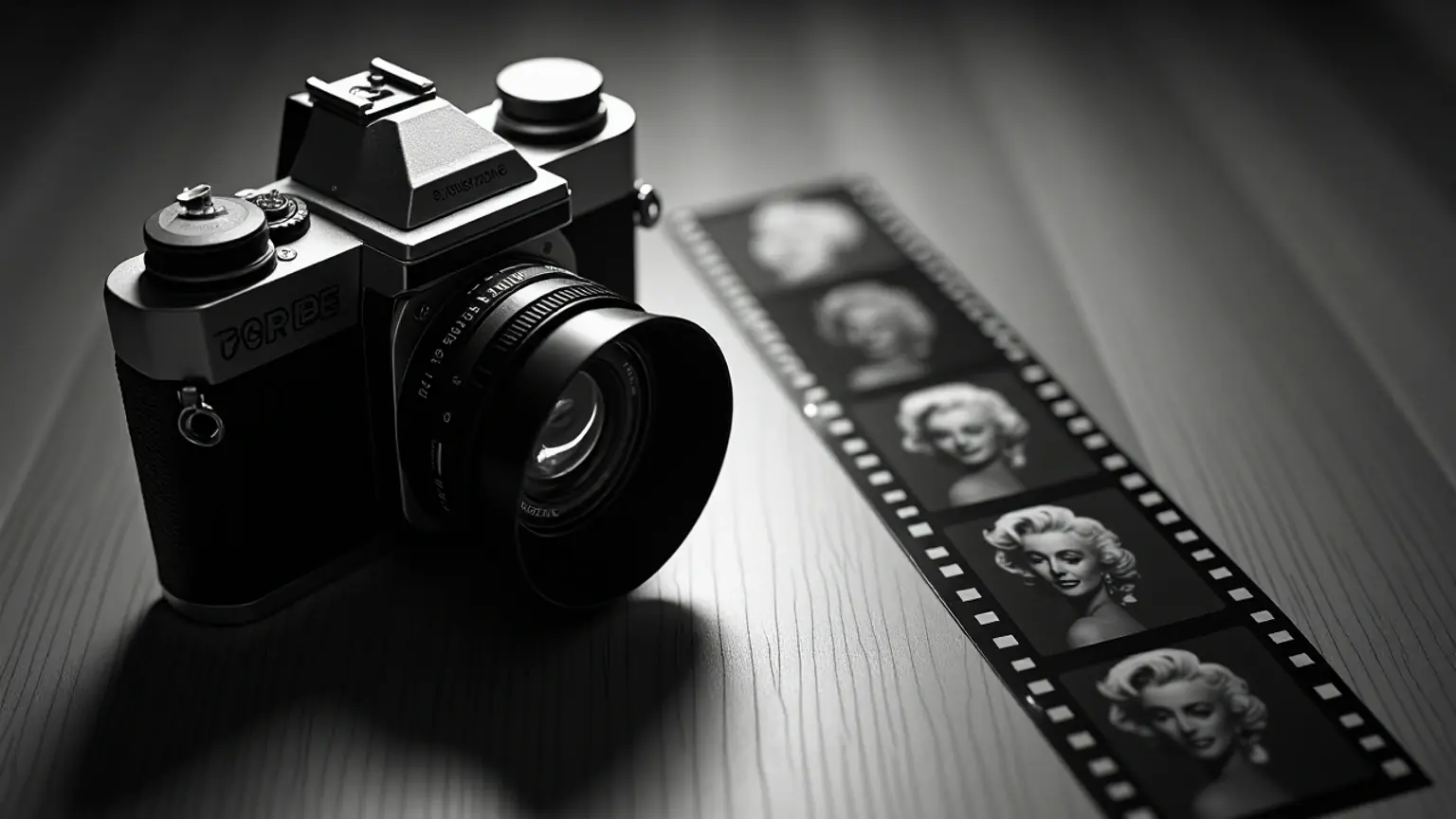
There is a fundamental difference between being looked at and being seen. Throughout the 20th century, few people were looked at more than Marilyn Monroe; her face became a global currency, a visual shorthand for beauty, desire, and tragedy. To truly understand this phenomenon, one must look at The 1950s Marilyn Monroe Aesthetic: How an Era Created an Icon. When we dive into her vast photographic archive, we discover something far more complex than a simple pin-up history. We see a woman who was a master of the lens—someone who used the camera as a mirror, a shield, and a stage.
Marilyn was photographed by the greatest artists of her time. From the structured studio portraits of Hollywood’s golden age to the raw, vulnerable sessions of her final months, her relationship with the camera was her most enduring romance. But did she ever disappear behind the image? Or was she, in fact, the one in control? Today, we look past the surface of these iconic Marilyn Monroe photos to explore the intersection of photography, power, and presence.
The Camera Loved Her—But She Also Knew It
The phrase “the camera loved her” is often used to describe natural photogenicity. For Marilyn, it was more than a passive trait; it was an active collaboration. From her early days as a model for the Blue Book Agency, she treated the camera as a living entity. She didn’t just pose; she interacted. She knew how to breathe into the lens, how to catch the light on her cheekbones, and how to create a sense of intimacy with an audience she would never meet.
In the realm of Marilyn Monroe photography, she was an active subject. She understood the technicalities of film grain, lighting ratios, and shutter speeds. She would often spend hours studying her contact sheets, marking them up with red pencils, crossing out images that didn’t meet her standards. This was not vanity. It was a radical act of image-making. She was the co-author of her own legend. She knew that in the world of shadows and light, the person who controls the gaze holds the power.
Milton Greene: Trust and the Art of Intimacy
Perhaps no one captured the “private” Marilyn as effectively as Milton Greene. Their collaboration in the mid-1950s produced over 5,000 images, many of which are now considered the gold standard of Marilyn Monroe photography. Greene was not just her photographer; he was her business partner and friend. This foundation of trust allowed Marilyn to drop the “bombshell” mask.
In the famous “Ballerina” series or the quiet shots of her in simple robes, we see a woman who is relaxed and unperformed. These Marilyn Monroe photos feel different because the gaze is not dominant; it is observational. Greene allowed her to exist in the space without demanding a specific reaction.
This taught Marilyn that she could be seen without being consumed. It shows us that visibility is most powerful when it is rooted in safety. When we feel safe with the person behind the lens (or the screen), we can allow our true presence to emerge. These images remain iconic because they capture a soul at rest, a rare sight for a woman constantly chased by the flashbulbs of the paparazzi.
Bert Stern: The Last Sessions and the Power of Vulnerability
In 1962, just six weeks before her death, Marilyn sat for a three-day session with Bert Stern for Vogue. These images, known as “The Last Sitting,” are among the most discussed in the history of Marilyn Monroe photography. They are raw, transparent, and hauntingly beautiful.
In these photos, Marilyn is visibly tired. She has a scar from a recent surgery. She is sometimes out of focus. Yet, there is a profound power in this fragility. By allowing Stern to photograph her in this state, she reclaimed her humanity. She showed the world that a woman’s power is not diminished by her scars or her exhaustion.
The “Last Sitting” reminds us that presence is not about perfection. It is about being “here.” These Marilyn Monroe photos act as a manifesto for a different kind of visibility—one that accepts the whole self, including the parts that are broken or weary. In our modern world of filters and retouching, these images are a necessary reminder that truth is more compelling than glamour.
Publicity vs. Portraiture: The Struggle for Control
There is a sharp divide in Marilyn Monroe photography between her publicity stills and her private portraits. The publicity photos were products of the studio system. They were designed to sell a movie, a feeling, or a dream. They were often highly retouched and strictly posed.
In contrast, her portraiture sessions with photographers like Richard Avedon or Cecil Beaton were explorations of character. Avedon famously captured a moment where Marilyn “fell out of character.” After hours of posing and being “on,” she sat quietly in a corner, her expression turning somber and reflective. Avedon clicked the shutter, capturing the “real” Marilyn.
This tension between the “public” and the “private” image is something every woman navigates today. We have our “LinkedIn” face, our “Instagram” face, and our “mirror” face. Marilyn’s history teaches us that while we may have to provide a public image for the world, we must always keep a version of our image for ourselves. The power lies in knowing the difference.
The Feminine Gaze (Before It Had a Name)
We often talk about the “male gaze”—the way women are depicted as objects of desire for a male audience. Much of Marilyn Monroe photography was undoubtedly produced within this framework. However, Marilyn frequently subverted it.
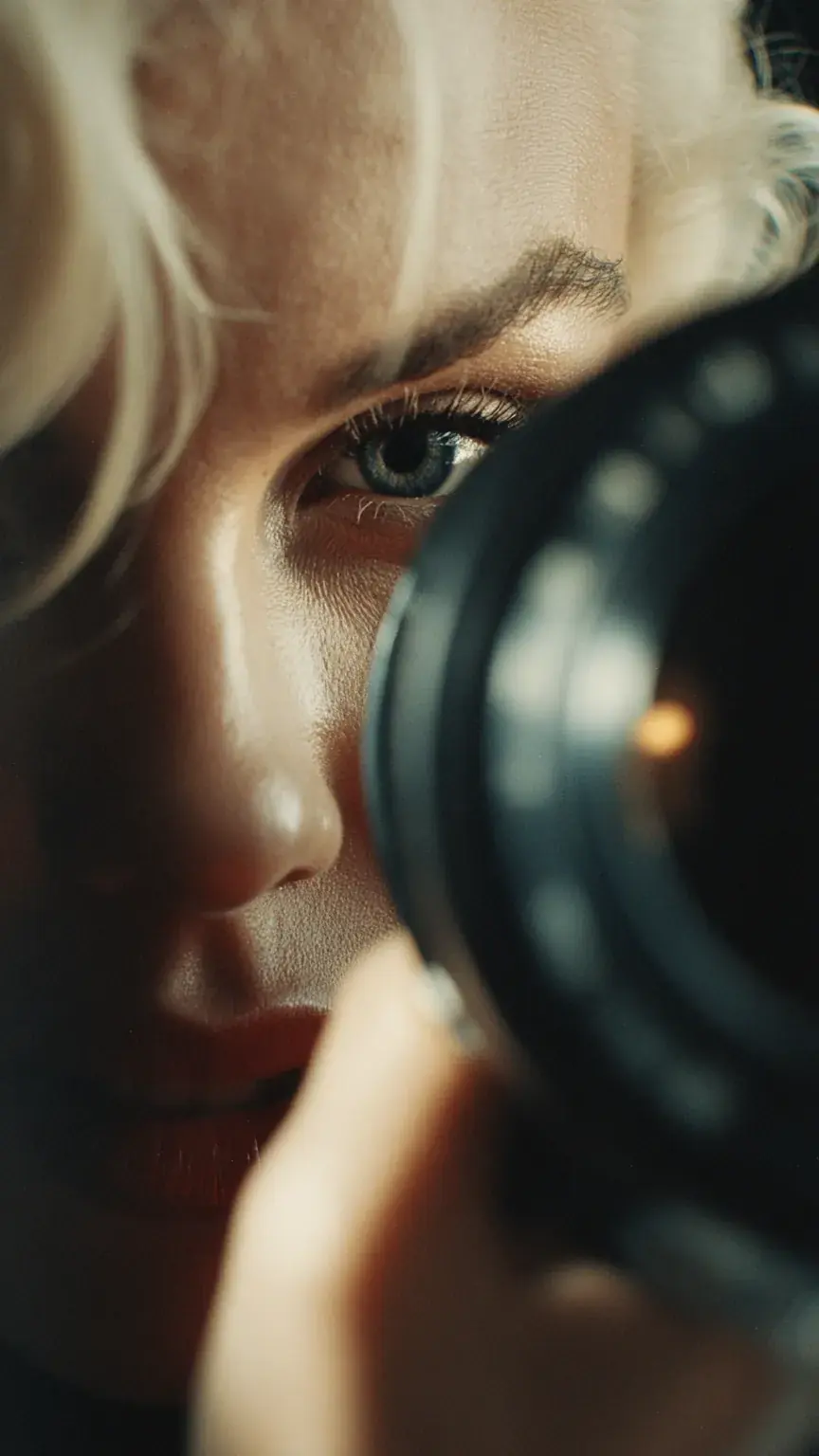
She had a habit of looking directly into the lens with an expression that said, “I know you are watching me.” This direct eye contact transforms the viewer from a voyeur into a witness. She wasn’t just being looked at; she was looking back. This is an early manifestation of the feminine gaze—a presence that claims its own space and acknowledges its own visibility.
By engaging with the camera in this way, she refused to be a passive object. She turned the act of being photographed into a dialogue. When you look at Marilyn Monroe photos today, you don’t feel like you are looking at a ghost; you feel like you are meeting a person. This is the power of presence. It transcends time and technology.
Why These Images Still Circulate on Pinterest and Beyond
In 2026, Marilyn Monroe photography is more popular than ever. Her images are saved, pinned, and shared by millions of people who weren’t even born when she was alive. Why does this visual legacy endure?
It is because her photos provide a sense of “embodied softness.” In a digital world that is often sharp, fast, and clinical, Marilyn’s images offer texture and warmth. They remind us of a time when images felt like they had weight. They also tap into a universal human need to be seen and understood.
When a woman pins a photo of Marilyn today, she is often looking for a reflection of her own desire for grace, power, or vulnerability. Marilyn has become a visual archetype—a vessel for our own stories. These Marilyn Monroe photos act as a mirror for the collective feminine experience.
Learning to Be Seen on Your Own Terms
What can we learn from Marilyn about our own visibility? We live in an era of constant photography. Every moment is a potential “content” opportunity. This can lead to a sense of exhaustion and a loss of self.
Marilyn’s journey through the lens teaches us the importance of boundaries. She was the most photographed woman in the world, yet she kept her deepest secrets hidden. She understood that visibility does not have to mean exposure. You can be “seen” by the world while keeping your inner sanctuary private.
As we navigate our own social media presence, we can ask ourselves: Am I the author of this image? Is this a collaboration with my true self, or am I just performing for an audience? Reclaiming the power of your own image is a vital act of self-care. Like Marilyn, you can choose the light. You can choose the angle. You can choose what to reveal and what to protect.
The Ethics of the Gaze
There is also a lesson in how we look at others. When we consume Marilyn Monroe photography, are we looking with empathy or with consumption? Her life reminds us that behind every iconic image is a human being with a pulse and a history.
In our activity book, we explore the idea of “beholding” rather than just “looking.” We invite you to look at your own photos with the same complexity you would bring to a work of art. Instead of looking for flaws, look for presence. Look for the story in your eyes. Look for the power in your posture.
The camera is a tool of perception. It can be used to objectify, or it can be used to celebrate. Marilyn Monroe used it for both, and in doing so, she left us a map of the feminine soul in the 20th century. Her photos are not just pictures; they are evidence of a woman who refused to disappear, even when the world tried to turn her into a myth.
Reflection: When You’re Seen, What Stays Protected?
This brings us to a personal reflection. We all have moments where we are “on stage”—whether it’s at work, in our families, or online. There is a pressure to be fully transparent, to show everything.
The Marilyn Example: Vulnerability with a Protected Core
But think of Marilyn. Even in her most “vulnerable” photos, there was a part of her that remained untouched. There was a core that belonged only to her. What is that part for you? When you are being seen by others, what part of your soul do you keep behind the curtain?
Invitation to Sovereign Visibility
In “52 Marilyn Moments,” we don’t ask you to be a model. We ask you to be a presence as we explore the art of “sovereign visibility.” We believe you have the right to be seen on your own terms, and the right to remain a mystery.
Become the Director of Your Light
The legend of Marilyn Monroe photography is a story of a woman who took the light and made it her own. You can do the same. As the director of your own visibility, you are the light at the center of your own lens.
The activity book invites you to explore presence—not just visibility. It is a space where you decide what is shared and what is kept. In a world that wants to consume your image, your presence is your final act of rebellion. Learn to stand in your own light.