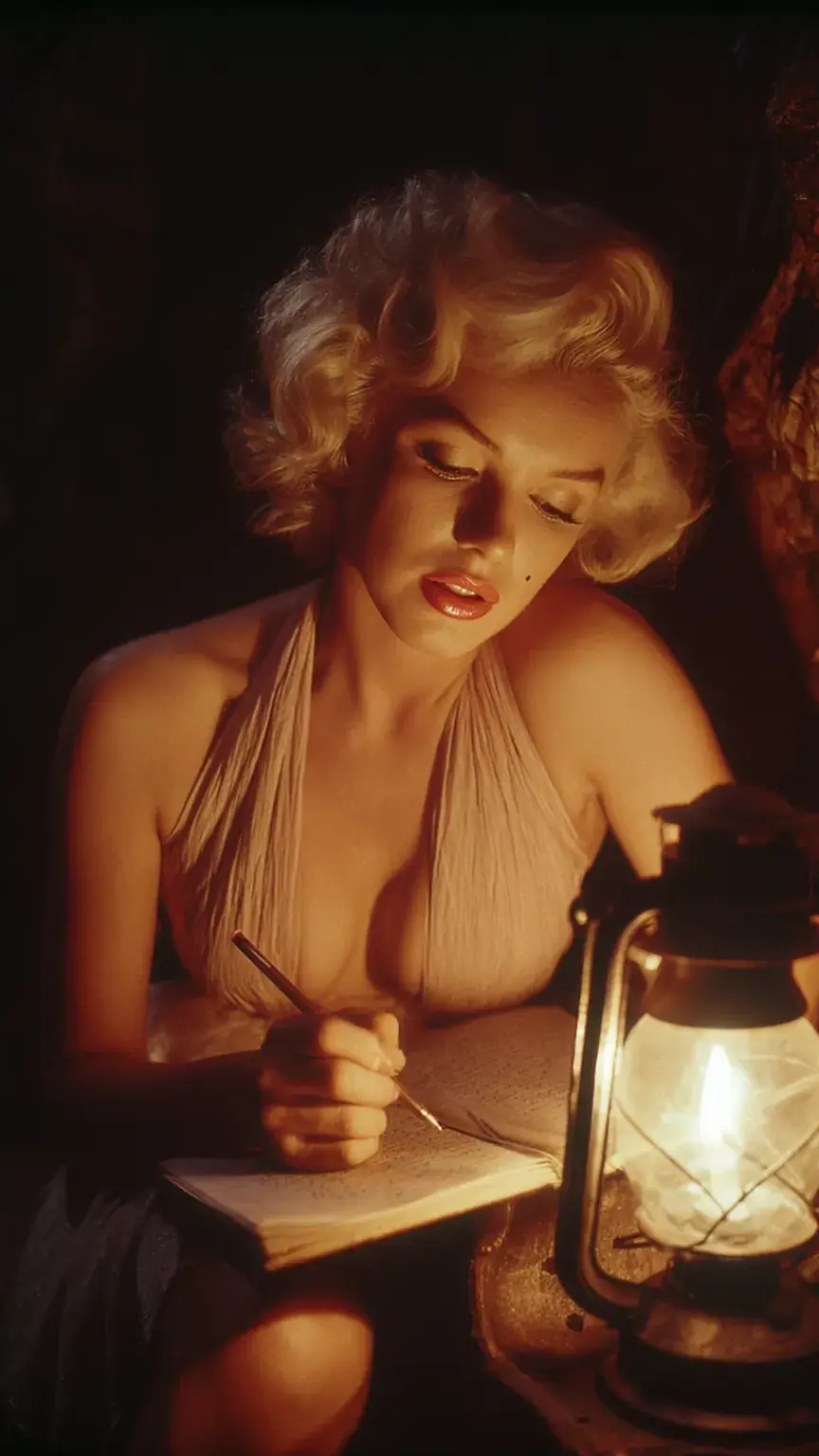
Is it possible for the world’s most famous “sex symbol” to also be a feminist icon? The question of Marilyn Monroe and feminism is one that has sparked heated debates for decades. To some, she represents the ultimate victim of a patriarchal studio system that objectified and consumed her. To others, she was a pioneer—a woman who navigated impossible constraints to build a brand, a company, and a legacy on her own terms.
But perhaps the problem lies in the question itself. When we ask “Was she a feminist?”, we are often looking for a modern, 2026 version of activism in a woman who lived in the rigid social structure of the 1950s. If we look closer, we find that Marilyn’s life wasn’t a political statement; it was a personal struggle for sovereignty. Today, we re-examine her story through a nuanced lens, moving beyond the stereotypes to find the quiet, resilient power of a woman who refused to stay in her place.
Why Marilyn Was Never a “Perfect Feminist”
To understand Marilyn Monroe and feminism, we must first reject anachronism. Marilyn did not have access to the vocabulary of the second-wave feminism that would emerge in the late 1960s. She didn’t have Gloria Steinem or Betty Friedan to guide her. Instead, she lived in a world where a woman’s credit card often required a husband’s signature and where “casting couches” were an accepted industry standard.
She was also a product of her time in her desire for traditional love and domestic stability. She often spoke of wanting to be a “good wife,” a sentiment that sometimes clashes with modern feminist ideals of total independence. However, being a “perfect feminist” is an impossible standard for any woman, let alone one under the magnifying glass of global fame. Her limitations weren’t failures of character; they were reflections of her environment.
Choice Within Constraint: The Gray Area of Agency
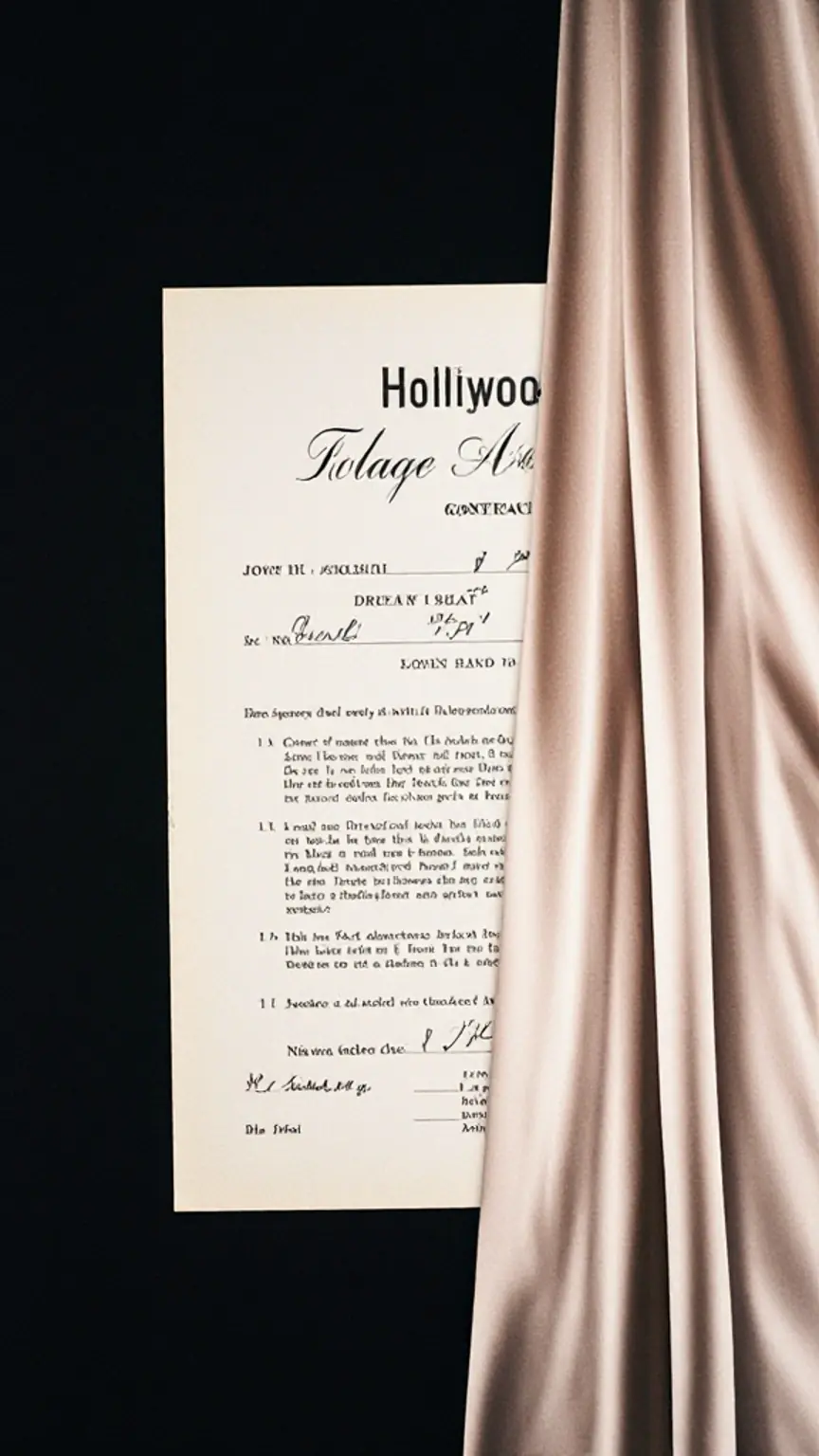
Feminism is, at its core, about choice. But what does choice look like when the options are limited? Marilyn’s career was a constant negotiation with a system that was designed to exploit her. She knew that her beauty and her “blonde” persona were her currency.
Critics often argue that she played into the “dumb blonde” stereotype, thereby damaging the cause of women. But a deeper look at Marilyn Monroe and feminism suggests that she was performing that stereotype as a survival strategy. She used the tools she had to gain a seat at the table. Once she had that seat, she began to change the rules.
Agency is not always about a loud, public rebellion. Sometimes, agency is the quiet act of saying “no” behind closed doors. Marilyn’s history is full of these “no’s”—refusing scripts she found demeaning, walking out on contracts that didn’t pay her fairly, and demanding to be treated as an artist rather than a piece of property.
Visibility as Power: The Right to Be Seen
We often think of visibility as something that happens to Marilyn, but as we’ve discussed in our posts on and , she was often the one directing the gaze.
There is a radical feminist reading of her visibility. In a society that often tells women to be modest or to “tone it down” to be taken seriously, Marilyn leaned in. She occupied space. She was seen without apology. By owning her body and her sensuality so publicly, she challenged the idea that a woman’s value is tied to her “purity” or her invisibility.
In the context of Marilyn Monroe and feminism, her visibility was a double-edged sword. It brought her power, but it also made her a target. However, the fact that she remained the “author” of her look until the very end is a testament to her personal agency.
Owning Femininity Without Irony
There is a strand of feminism that suggests women must adopt “masculine” traits—toughness, stoicism, distance—to be considered powerful. Marilyn rejected this. Her power was undeniably, vibrantly feminine.
She didn’t apologize for her softness, her breathy voice, or her love of glamour. She proved that you can be “soft” and still be a negotiator. You can be “pink” and still be a producer. This is what we call Soft Feminism. It is the belief that femininity is not a weakness to be overcome, but a valid and powerful way of being in the world.
When we look at Marilyn Monroe and feminism today, we see a woman who refused to trade her femininity for respect. She wanted both. This remains one of the most relevant lessons for women today: you don’t have to harden yourself to claim your seat at the table.
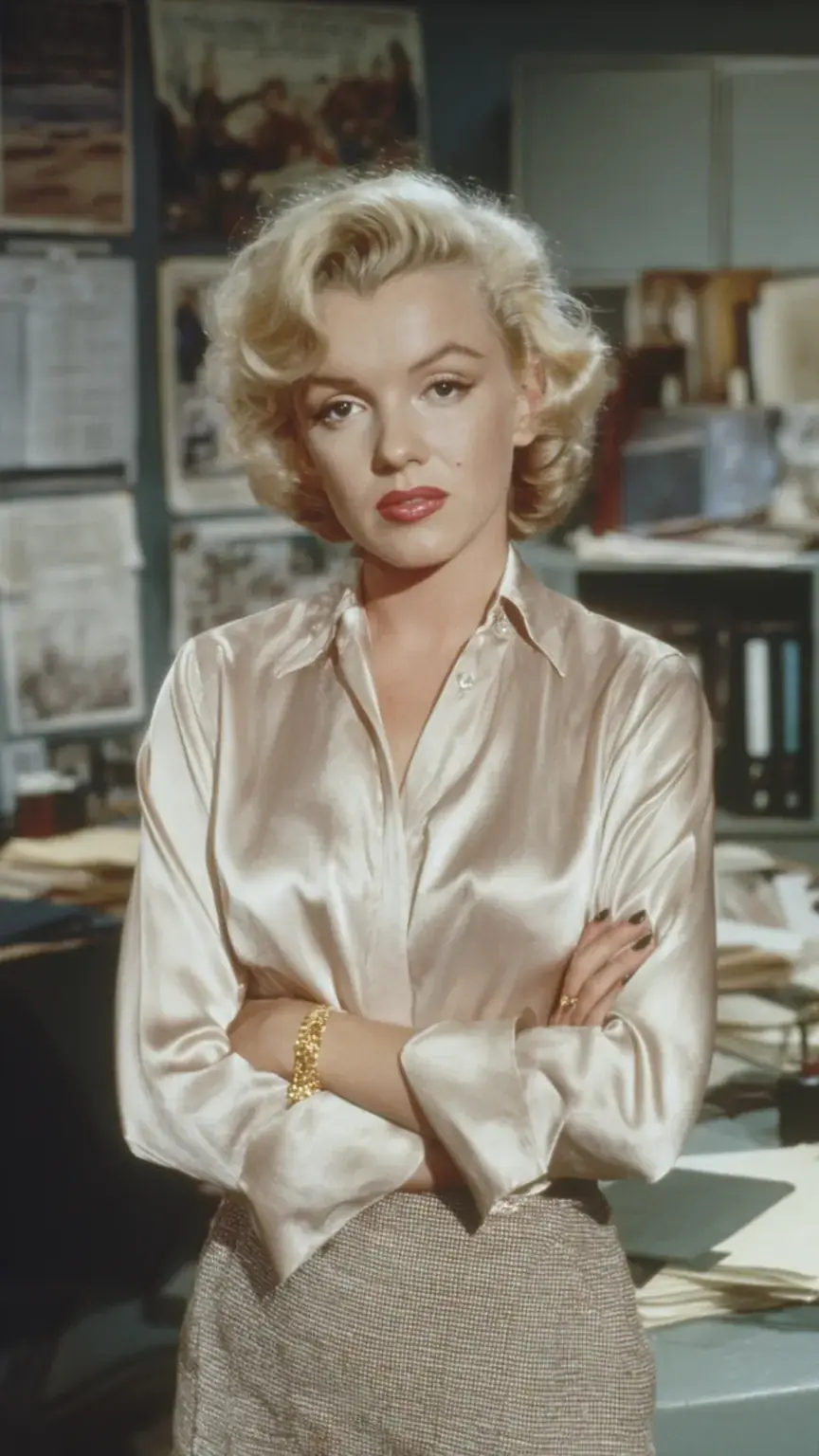
Economic and Creative Agency: Marilyn Monroe Productions
One of the strongest arguments for the “pro-feminist” reading of her life is the founding of Marilyn Monroe Productions (MMP) in 1955. This was an incredibly rare and brave move for an actress at the time.
Frustrated with the roles she was being offered and the fact that she was being paid a fraction of what her male co-stars earned, Marilyn moved to New York and started her own company. She was only the second woman in Hollywood history (after Mary Pickford) to do so.
- She fought Twentieth Century-Fox for a year, eventually winning a landmark contract that gave her more money and, more importantly, the right to approve directors and cinematographers.
- She sought out intellectual circles, studying at the Actors Studio to improve her craft.
- She produced The Prince and the Showgirl, taking full control over the business side of the film.
This wasn’t the behavior of a “victim.” This was the behavior of a woman who understood economic power. In the history of Marilyn Monroe and feminism, MMP is the smoking gun of her agency. She wanted to own the means of her own production.
Why She Still Divides Feminist Readings
Even today, Marilyn remains a polarizing figure in feminist circles.
- The Critical View: Some argue that her legacy is too tied to male desire and that she reinforces unrealistic beauty standards that still haunt women today.
- The Reclaiming View: Others, especially younger generations on platforms like Pinterest and TikTok, see her as a tragic figure who spoke truth to power and whose vulnerability was a form of radical honesty.
This division is actually a sign of her importance. We don’t argue over things that don’t matter. Marilyn remains a site of struggle for how we define “the ideal woman.” The fact that she can be read in so many different ways is proof of her complexity. She refuses to be a simple “hero” or a simple “victim.” She is both, and she is neither.
A Soft Feminist Legacy: The Right to Contradiction
The most important thing Marilyn Monroe and feminism teaches us is the right to be contradictory.
A woman can be:
- Powerful and vulnerable.
- Ambitious and lonely.
- A sex symbol and a serious artist.
- A producer and a “blonde.”
Marilyn’s life was a mess of contradictions, and that is what makes her so human. Modern feminism is increasingly moving toward this “inclusive” view—where women don’t have to be one thing to be “empowered.” We are allowed to have “Marilyn moments” of deep glamour and “Norma Jeane moments” of deep doubt.
Reflection: Where Is Your Power Found?
The story of Marilyn invites us to look at our own lives. We all navigate systems—at work, in our families, in society—that try to define us.
Where do you feel pressure to be “strong” in a way that doesn’t feel like you? Do you feel you have to hide your softness to be taken seriously? Or do you feel you have to perform a certain version of “womanhood” to be accepted?
In our activity book, “52 Marilyn Moments,” we explore the concept of Sovereignty. We look at how Marilyn carved out a space for herself in a world that wanted to own her. We invite you to find the “Marilyn Monroe Productions” in your own life—the places where you are the director, the owner, and the ultimate authority.

Conclusion: Softness Is Not Submission
Marilyn Monroe may not have marched in the streets or written feminist manifestos, but she lived a life that challenged every boundary placed upon her. She was a woman who used her “soft power” to move mountains in Hollywood.
If feminism is the belief that women are human beings with the right to their own agency, then Marilyn’s struggle for that agency makes her a vital part of the conversation. She reminds us that our power doesn’t always have to be loud. It can be found in the way we dress, the way we negotiate, and the way we refuse to be simplified.
In the end, Marilyn Monroe and feminism is a story about the courage to be seen as you are, in all your complexity. Softness is not submission; it is a different kind of strength. It is the strength to remain a woman in a world that often wants you to be either an object or a machine. Be the woman.