
“Sorry to bother you…”
“I’m not sure if this makes sense, but…”
“I’ll just be a second, I don’t want to get in the way.”
How many times a day do these phrases pass your lips? For many women, apologizing has become a linguistic reflex—a “soft” way to negotiate our right to occupy time, space, and attention. We have been socialized to believe that a “good” woman is one who is helpful, accommodating, and, above all, unobtrusive.
But this constant shrinking comes at a high cost to our feminine confidence. When we apologize for our presence, we are telling ourselves (and the world) that we are an inconvenience. We are treating our existence as a debt that needs to be paid.
True visibility isn’t about seeking the spotlight; it’s about the courage to be seen as you are, without feeling the need to provide a justification for your space.
Visibility Isn’t the Same as Exposure
One of the reasons we fear being seen is that we confuse visibility with exposure.
- Exposure feels like being under a magnifying glass. it is performative, judgmental, and often outside of our control. It’s about being “on display.”
- Visibility is a state of presence. It is about being “here”—available for connection, ready to contribute, and comfortable in your own skin.
In the realm of feminine confidence, visibility doesn’t require you to be an extrovert or a stage performer. You can be highly visible while remaining deeply quiet. Visibility is simply the refusal to hide your light or mute your truth to make the room feel “easier” for others.

Feminine Confidence and the Fear of Taking Space
Why does taking space feel so dangerous? For many, it’s a fear of the “gaze.” We worry that if we are seen, we will be:
- Judged: For not being “perfect” enough.
- Misunderstood: For being “too much” or “not enough.”
- Resented: For having the audacity to exist without apology.
This fear creates a habit of “pre-shrinking.” We make ourselves smaller before anyone even asks us to. We lower our voices, we soften our opinions, and we step to the side. But feminine confidence grows when we realize that other people’s discomfort with our presence is not our responsibility to fix.

Marilyn Monroe — Seen by All, Known by Few
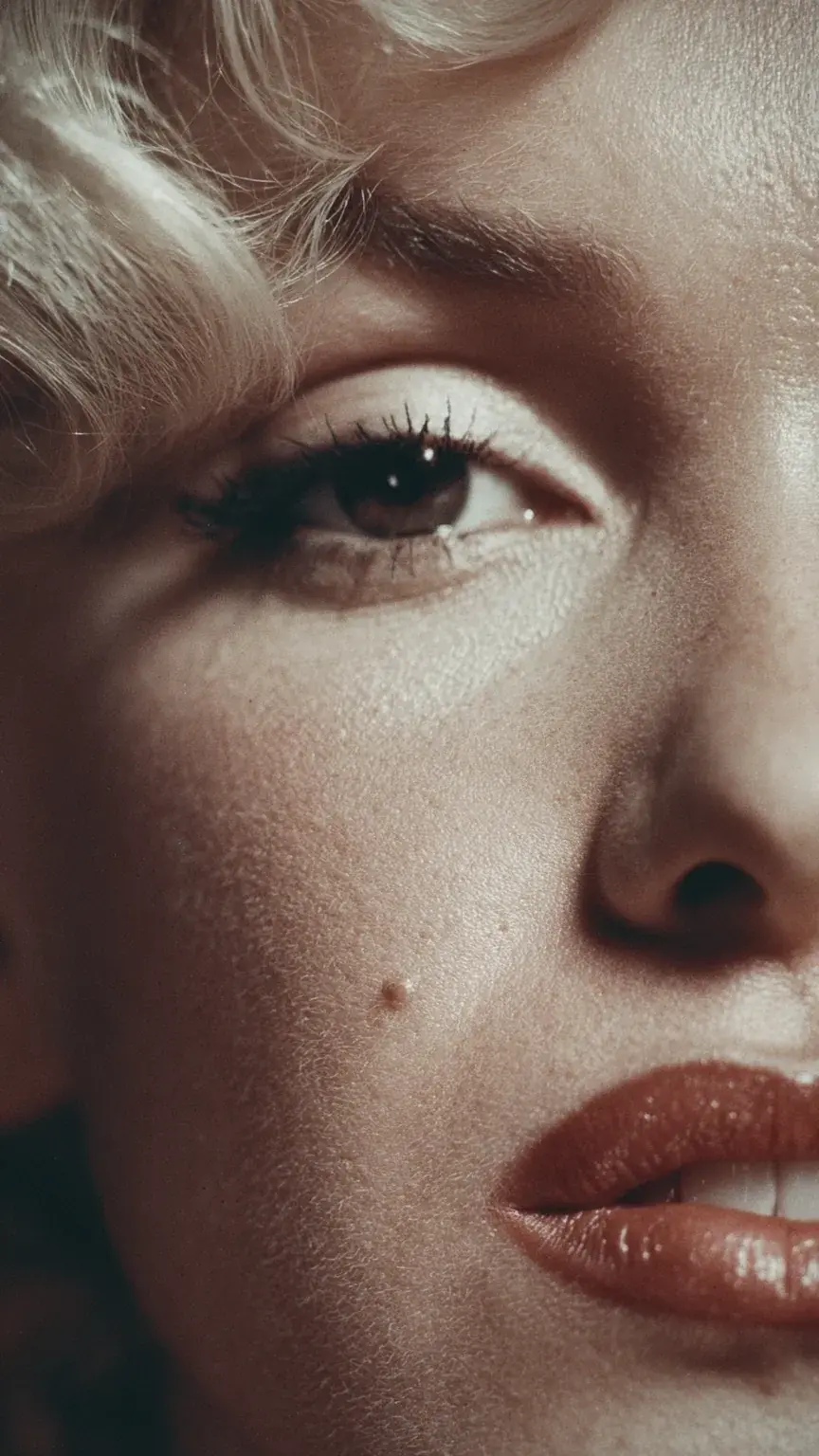
Marilyn Monroe is the ultimate case study in the complexity of visibility. She was arguably the most visible woman on the planet. Her image was everywhere, yet she often spoke about a profound sense of invisibility.
“I knew I belonged to the public and to the world… because I had never belonged to anything or anyone else.”
Marilyn lived in a state of hyper-visibility. She was constantly looked at, but rarely looked into. This is the shadow side of visibility: when the world sees a character instead of a person.
Her life teaches us that being “seen” isn’t just about physical presence; it’s about authenticity. The loneliest kind of visibility is the kind where you are performing. True feminine confidence is about showing yourself in a way that feels safe for your soul—where your “outside” matches your “inside.”
Why Apologizing Becomes a Protective Habit
If you are a chronic apologizer, don’t judge yourself. It’s likely a mechanism you developed to stay safe or to be liked. In many environments, people label a woman who doesn’t apologize as “aggressive” or “difficult.”
Apologizing becomes a shield. It says, “Please don’t be threatened by me; I already know I’m a bother.”
But while this shield might protect us from external friction, it creates internal erosion. Every time you apologize for something that isn’t a mistake, you chip away at your own self-worth. You are essentially telling your subconscious that you are an intruder in your own life.

Reclaiming Visibility Without Hardening
Many women believe that to stop shrinking, they have to become “hard” or “tough.” They think they have to adopt a masculine “power pose” or a sharp tone.
But you can reclaim your visibility while staying completely soft. This is the art of Soft Visibility.
How to practice it:
- Wait for the space: Instead of saying “Sorry to interrupt,” wait for a pause and simply start speaking.
- State, don’t explain: When you have a need or a boundary, state it clearly. You don’t need to provide a three-paragraph justification for why you need rest or why you’ve changed your mind.
- Own your movement: Walk into a room as if you are supposed to be there. Because you are.
- Hold the eye: Practice a gentle, steady gaze. It’s not a challenge; it’s a connection.

If You Want to Be Seen but Feel Afraid
It is completely normal to feel an ambivalence about visibility. Part of you wants to be recognized, understood, and appreciated. Another part of you wants to hide under a blanket where it’s safe.
Feminine confidence isn’t about the absence of this fear. It’s about the progression.
- Start by being seen by yourself (journaling is the first step).
- Then, be seen by a trusted few.
- Eventually, you will find that “taking space” isn’t about being grand; it’s just about being real.
You don’t need permission to exist or a certificate of perfection to speak. You are a human being—and that is all the “right” you will ever need.

Reflection — Where are You Shrinking?
Take a moment to scan your life—your work, your relationships, your creative projects.
Where are you shrinking instead of simply being present? What is one conversation or situation where you can commit to showing up as you are, without an apology first?
In our activity book, “52 Marilyn Moments,” we create a sanctuary for this kind of work. These prompts are here to help you peel back the layers of “sorry” and discover the steady, beautiful presence underneath. It’s a space to practice being seen by the most important person in your life: You.

Conclusion: The Beauty of Occupying Your Space
The world is better when you are in it—fully, softly, and visibly. When you stop apologizing for your existence, you give other women permission to do the same.
Your feminine confidence is a gift to the world. Don’t hide it. Don’t mute it. And for heaven’s sake, don’t apologize for it.
Stand in your light. It was made for you.