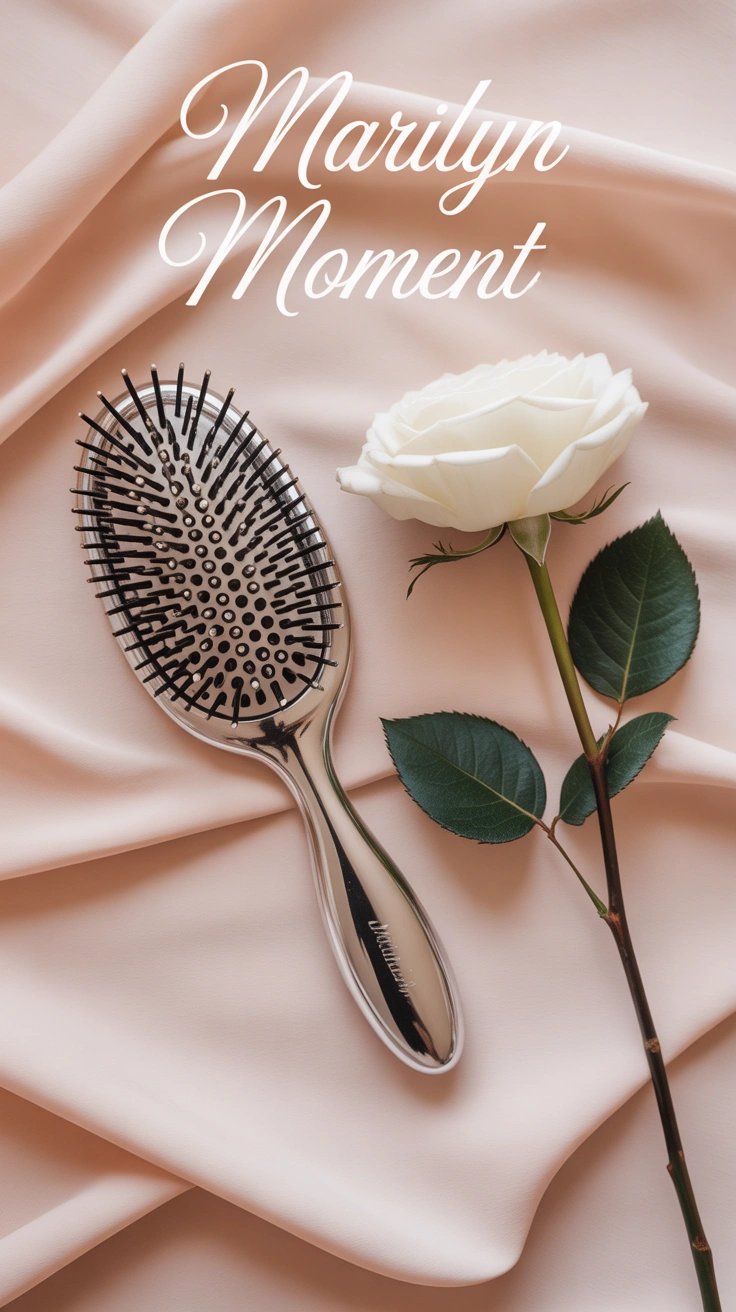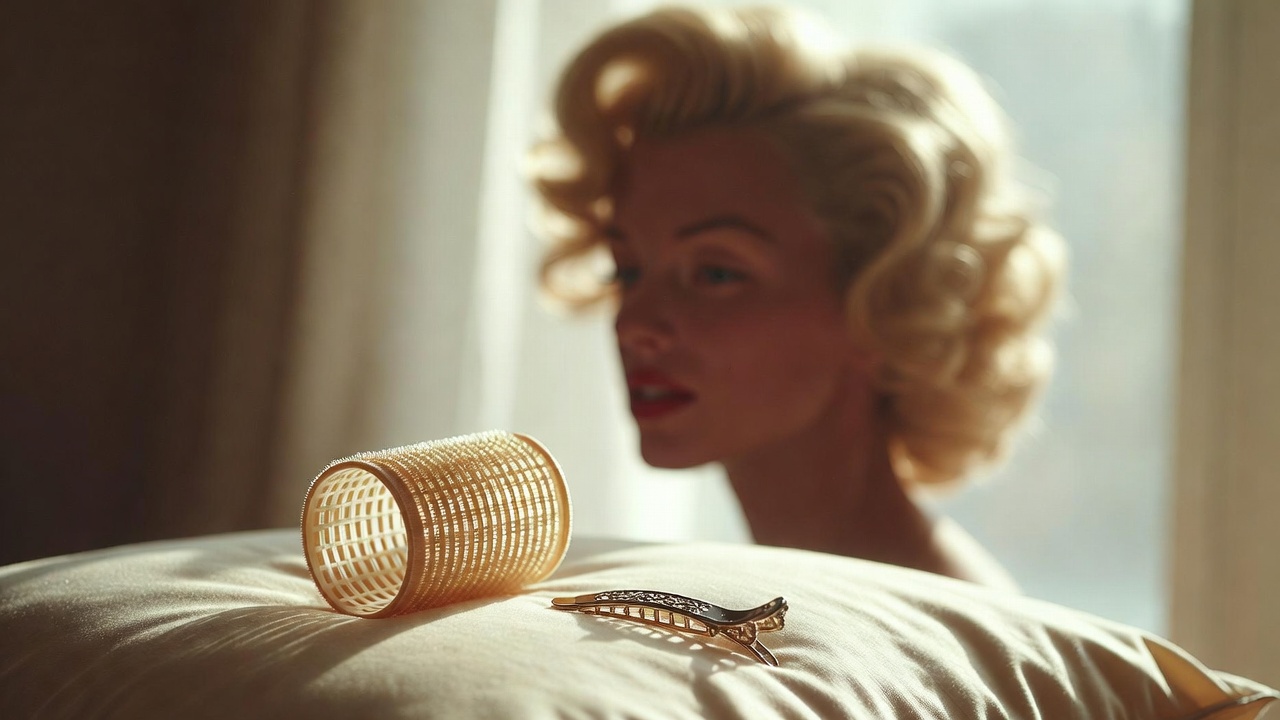
If you saw only a silhouette—a simple outline of soft, pillowy curls—you would know immediately who it was. Certain features become so synonymous with a person that they transcend fashion and become symbols. Among all the elements of her image, Marilyn Monroe hairstyles are perhaps the most vital to her “visual brand.” Her hair was her light. It was the frame that invited the world to look at her face, and it was the one thing that rarely changed throughout her decade of superstardom.
In a world that constantly demands reinvention, there is a quiet power in staying the same. While other actresses changed their hair for every role, Marilyn understood the psychological impact of a “signature.” She chose a look and she mastered it. Today, we explore the history, the technique, and the deeper meaning behind the most famous hair in Hollywood history.
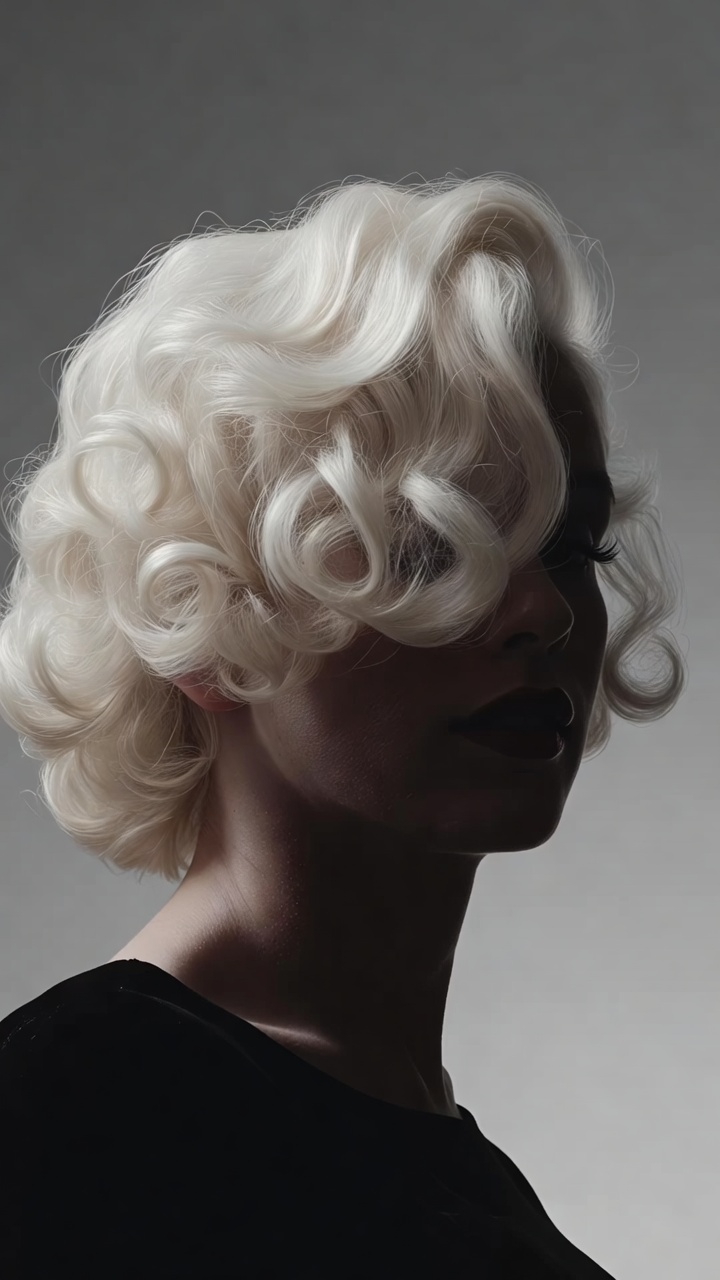
The Power of a Signature Hairstyle
We often think of style as a constant search for something new. But for Marilyn, repetition was a strategy. By maintaining a consistent look, she created a sense of familiarity with her audience. The Marilyn Monroe hairstyles we recognize today—the short, platinum blonde curls—were a form of visual safety. When people saw that hair, they knew they were in the presence of “Marilyn.”
This consistency was not a lack of imagination. It was an exercise in control. In the chaotic world of the 1950s studio system, Marilyn’s hair was one of the few things she could keep constant. It was a choice of stability. By refusing to follow every passing trend, she placed herself above the trends. She didn’t want to be “fashionable”; she wanted to be iconic.
For the modern woman, this is a profound lesson. You do not have to change who you are to be interesting. There is a deep, grounded confidence in finding what works for you and having the courage to keep it. Your signature is your territory.
The Evolution of the Blonde: From Honey to Platinum
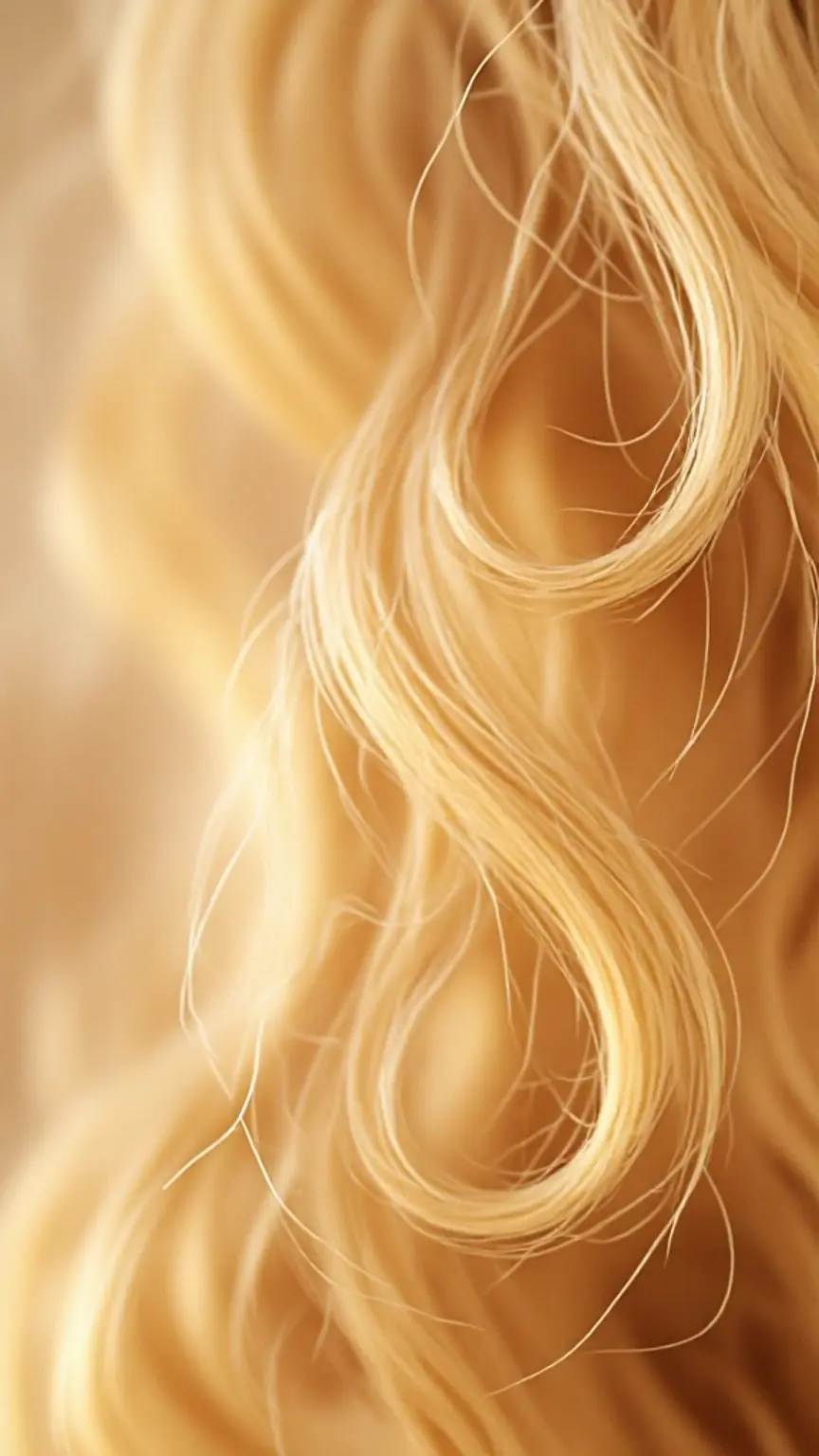
The story of Marilyn Monroe hairstyles actually begins with a transition. Born with naturally brunette, curly hair, Norma Jeane Mortenson began her modeling career as a “honey blonde.” It was a soft, natural look that suited the “girl next door” archetype of the late 1940s.
However, as she transitioned into the persona of Marilyn, the blonde became more intentional. Working with legendary stylists like Sylvia Barnhart and Kenneth Battelle, she moved toward a shade often described as “pillow-case white” or “platinum.” This wasn’t just a color choice; it was a lighting choice.
Marilyn reportedly used up to 17 different shades of blonde to achieve the perfect depth. She understood that flat color looks dull on camera. She needed her hair to have “vibration.” This attention to detail is what makes Marilyn Monroe hairstyles feel alive even in black-and-white photographs.
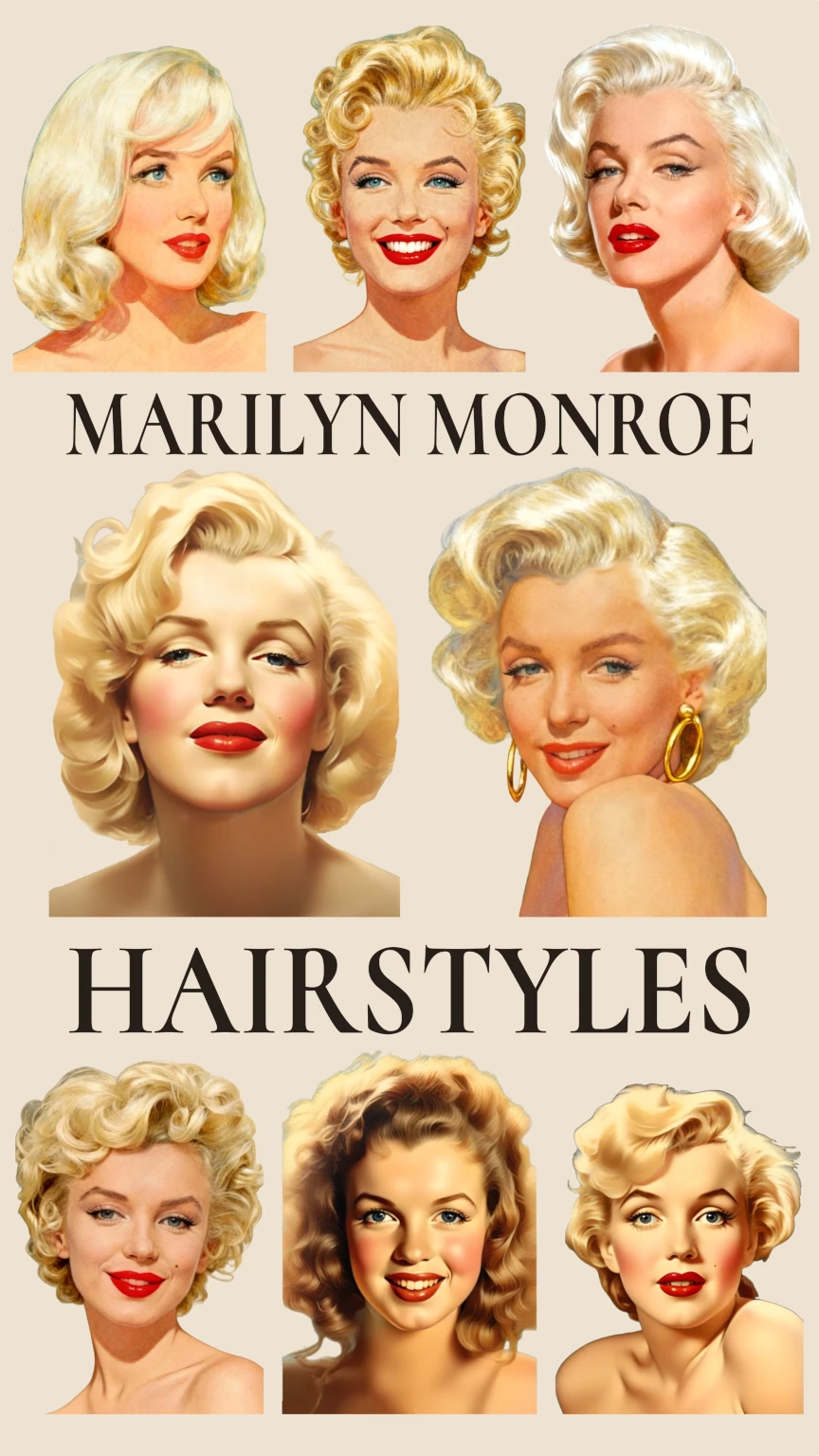
The Soft Blonde Curls: The Architecture of Light
The most famous of the Marilyn Monroe hairstyles is the short, neck-length curl. This look was achieved through a rigorous process of pin-curling and setting. Marilyn’s hair had to be soft enough to move when she laughed, but structured enough to hold its shape under the heat of studio lights.
These curls were designed to catch the light. Blonde hair, especially in platinum shades, acts as a natural reflector. It creates a halo effect around the head, which in turn softens the features of the face. This is why Marilyn always seemed to “glow.” The hair was doing the work of a professional lighting rig.
Furthermore, the volume of the curls created a visual balance with her hourglass figure. The “bigness” of the hair made her waist appear smaller and her neck appear more delicate. It was a complete architectural approach to beauty. In the world of Marilyn Monroe hairstyles, nothing was left to chance.
The Art of the Pin Curl
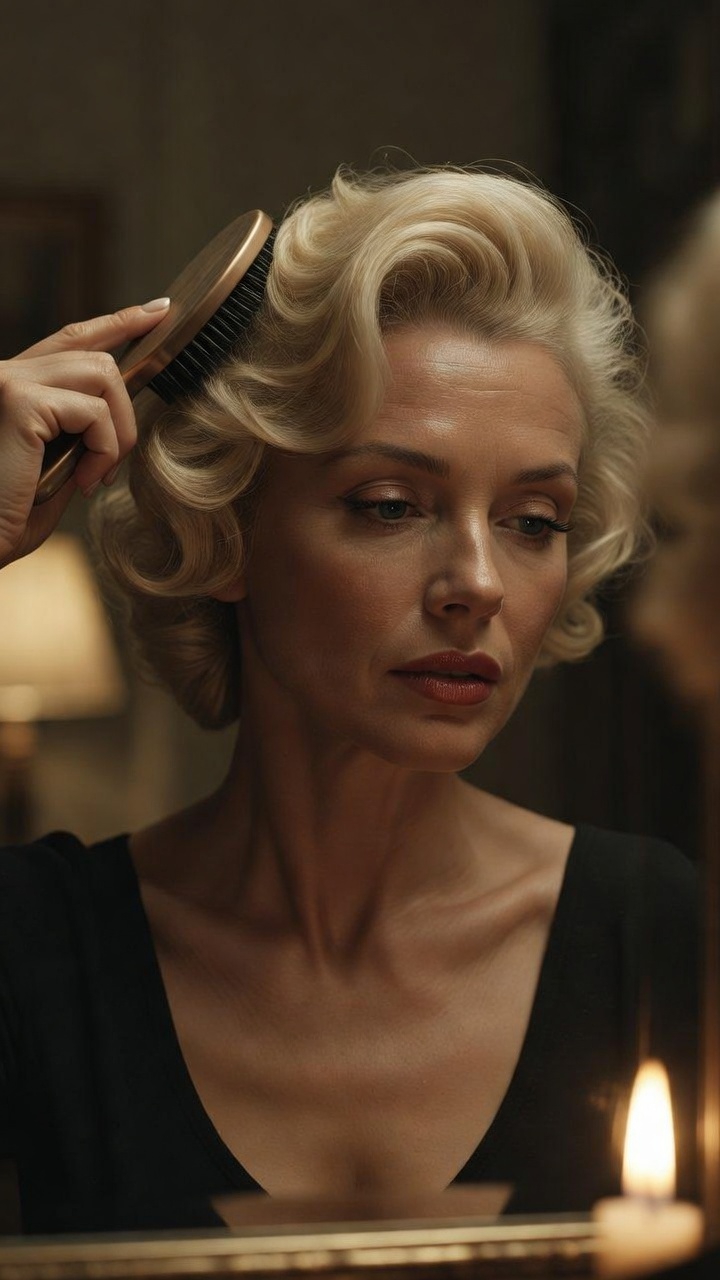
To understand the daily life of Marilyn, you have to understand the pin curl. Most of her iconic looks were not created with curling irons, but through wet-setting. Her hair was washed, set in small metal clips (pin curls), and allowed to dry slowly. This created a curl that was “bouncy” and resisted frizz.
Marilyn was known to sleep in these clips to ensure her hair was perfect for the morning. This speaks to the “work” behind the glamour. The Marilyn Monroe hairstyles we admire were the result of hours of preparation. It reminds us that “effortless” beauty is almost always the result of incredible effort.
This ritual of setting the hair was also a moment of quiet. In the chaos of her life, the time spent in the stylist’s chair was a sanctuary. It was a time when she was being cared for, a time when she could look in the mirror and see the icon being built, layer by layer.
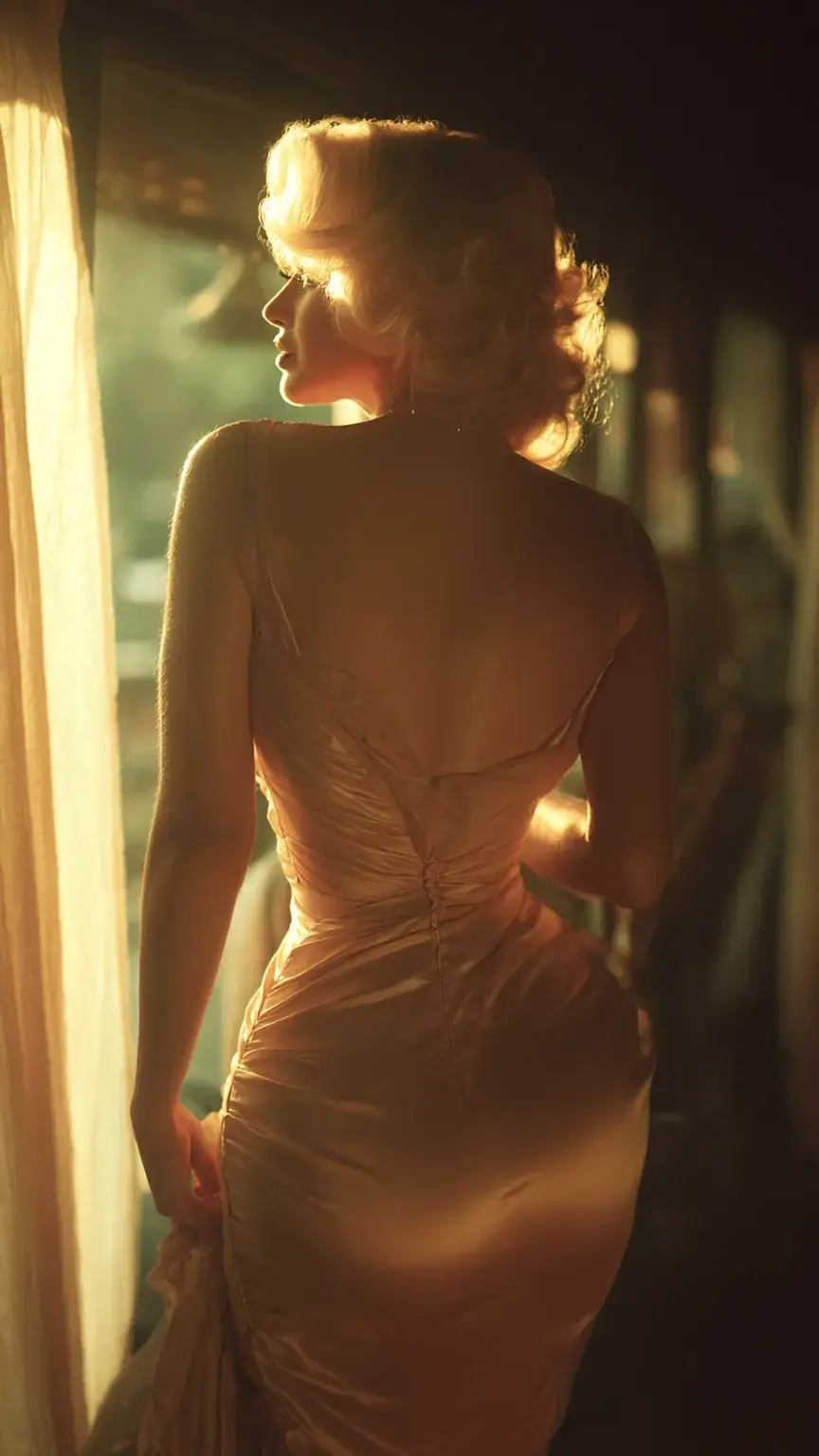
Classic Hollywood Waves: The High Glamour Gaze
For red carpet events and formal film sequences, the Marilyn Monroe hairstyles shifted toward the “Old Hollywood Wave.” These were more structured and sculptural than her everyday “breezy” curls. The hair was brushed out into deep, synchronized waves that followed the line of her cheekbones.
These waves added a sense of formality and “seriousness” to her look. They suggested a woman who was aware of her status as a queen of the screen. While the breezy curls were for “The Girl,” the waves were for “The Star.” This subtle shift in texture allowed her to navigate different social expectations without losing her core identity.
Even in these structured waves, she maintained a sense of softness. She never liked “stiff” hair. She wanted it to look touchable. This is the secret of her appeal: the Marilyn Monroe hairstyles were never aggressive. They were always an invitation to a softer, more beautiful world.
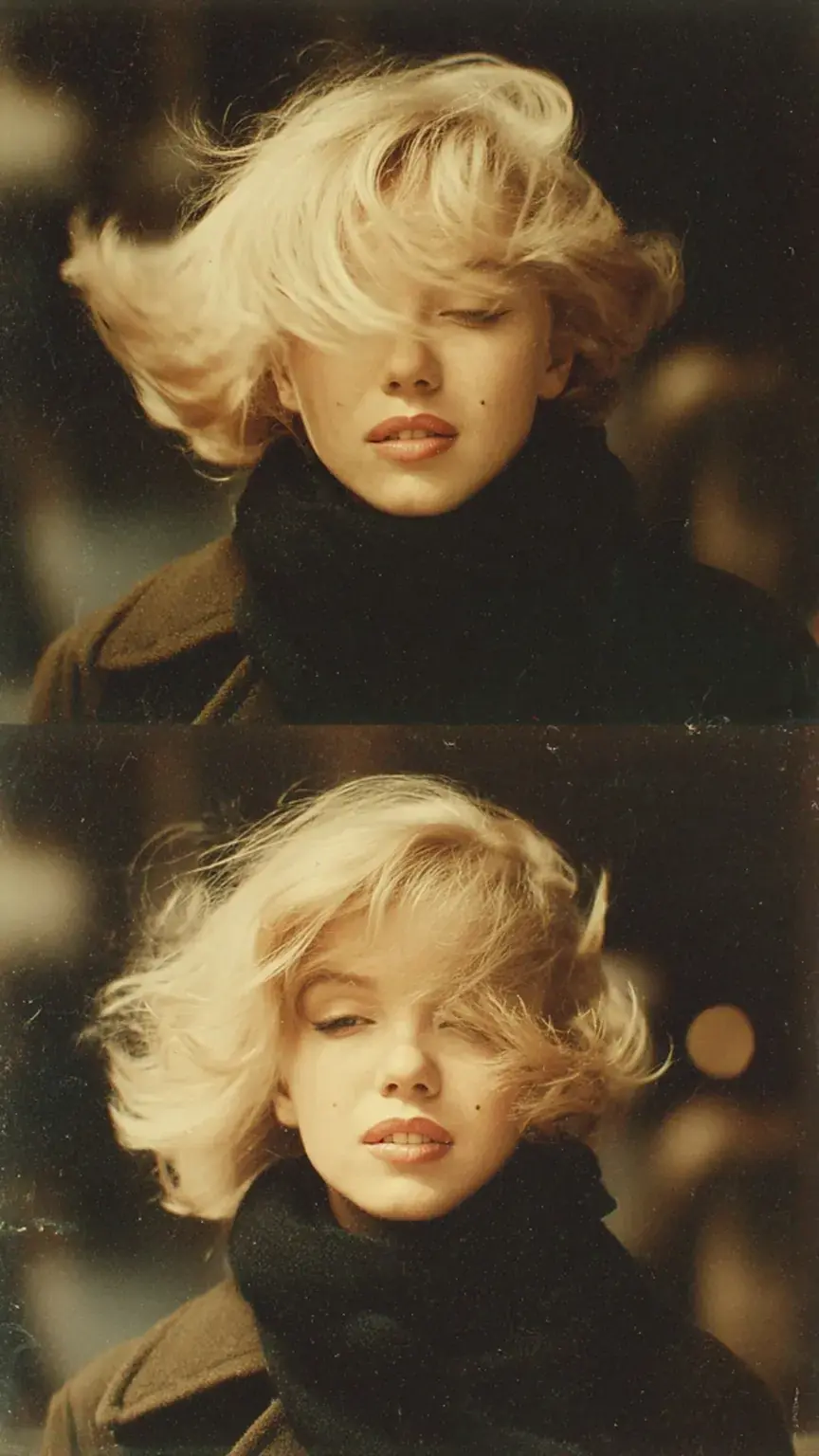
Short Hair, Long Impact: Why Length Matters
Marilyn almost always kept her hair short. She understood that long hair can sometimes swallow a person’s presence. By keeping her hair at or above the shoulders, she exposed her neck and jawline. This created a sense of vulnerability and “openness” that became a key part of her charm.
Short hair also allowed for more movement. When she tilted her head or threw it back in a laugh, the hair reacted instantly. It became an extension of her body language. This is a vital part of Marilyn Monroe hairstyles—they weren’t just a static “look”; they were a performance in themselves.
By choosing a shorter cut, she also stood out in an era where many stars were transitioning to longer, heavier “beehive” styles. Marilyn stayed true to her proportions. She knew that her face was her most important asset, and she used her hair as a frame, never a curtain.
Hair as Frame, Not Disguise
The primary function of Marilyn Monroe hairstyles was to highlight her eyes and lips. Because the hair was blonde and voluminous, it acted as a neutral, glowing backdrop. This forced the viewer to focus on her expressions.
She often had a small “peak” of hair that fell toward one eye—the famous “peek-a-boo” curl. This added a sense of mystery and playfulness. It gave her something to hide behind and something to peek out from. It was a tool for flirtation and for storytelling.
When we look at her hair, we aren’t just seeing a “style.” We are seeing an emotional map. The way her hair was styled told you how she was feeling—whether she was the playful girl of The Seven Year Itch or the tragic, soulful woman of The Misfits. The hair moved with the woman.
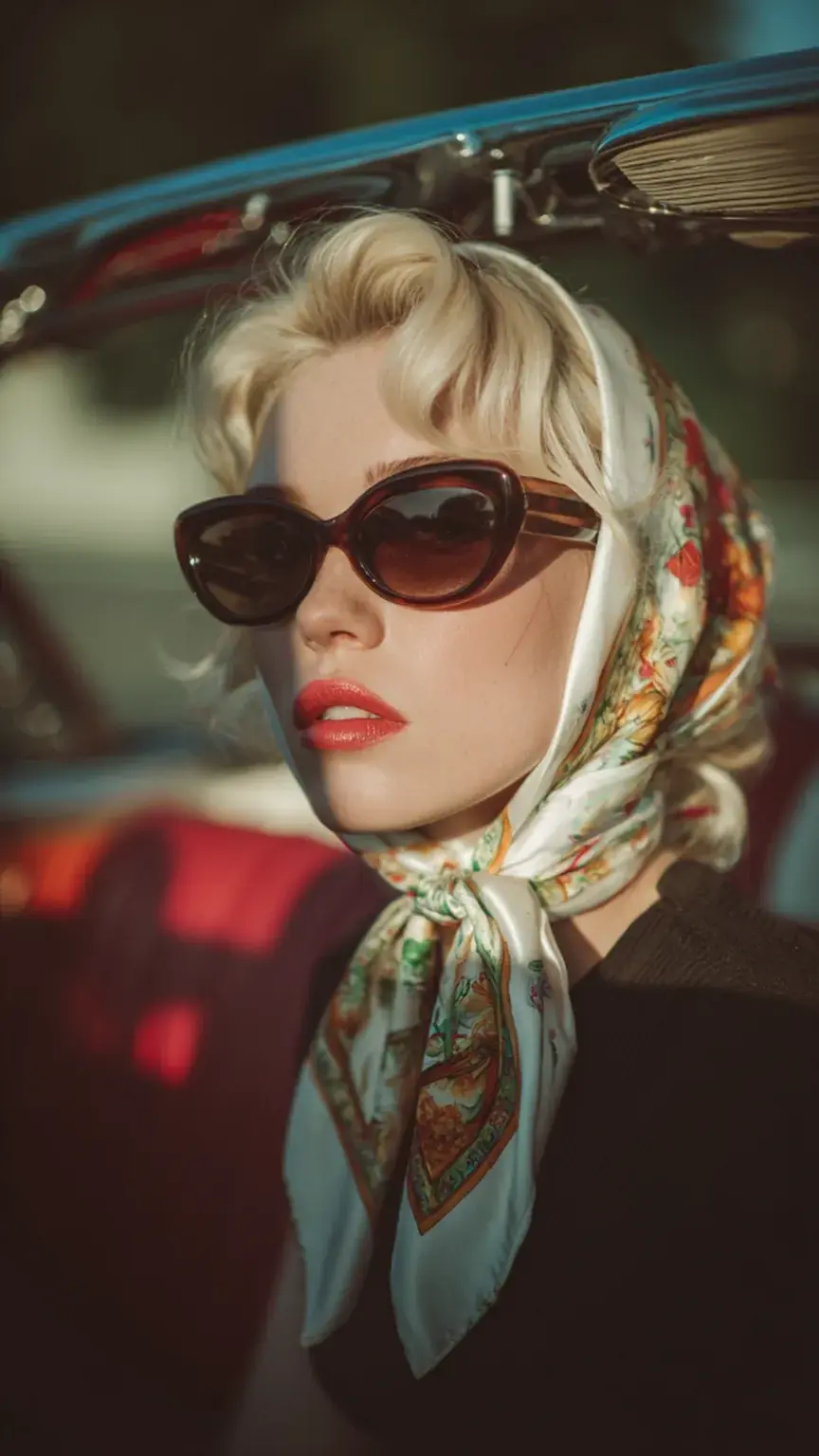
Off-Duty Hair: Scarves and the Need for Withdrawal
Away from the cameras, the Marilyn Monroe hairstyles took on a more practical form. She was a great lover of silk headscarves. She would wrap her hair tightly, put on her sunglasses, and disappear into the crowd.
This was her “protective” hair. After hours of bleaching, setting, and styling, the scarf offered a rest for her hair and her soul. It was a way to “turn off” the icon. The scarf acted as a boundary between her public persona and her private self.
This duality is important. It shows that even the most visible woman in the world needed a way to hide. The “off-duty” look of Marilyn Monroe hairstyles—often involving a simple bandana or a messy, brushed-back look—reminds us that we don’t have to be “on” all the time. Simplicity is a valid form of beauty.
Why Modern Women Still Pin These Hairstyles
Why, in 2026, do we still see Marilyn Monroe hairstyles all over Pinterest and Instagram? It is because her look offers “aesthetic safety.” In a world of neon colors and “fast” beauty trends, her soft blonde curls feel like home. They represent a version of femininity that is powerful without being loud.
Modern women use these codes to find their own sense of “classic” self. We see the “Marilyn Bob” returning to fashion runways. We see a resurgence in pin-curling techniques. By adopting these styles, women are reaching for the same sense of stability and light that Marilyn used to navigate her own life.
She created a template that works. The Marilyn Monroe hairstyles are mathematically pleasing—they follow the rules of balance and light. But more than that, they carry an emotional weight. They remind us of a woman who took the time to craft herself, and there is something deeply inspiring about that level of intentionality.
Reflection: What Part of Your Appearance Feels Most “You”?
This brings us to our weekly reflection. Marilyn found her power in a signature. She found her light in a specific shade of blonde and a specific type of curl. She didn’t let the world change her silhouette.
What part of your appearance feels like your “home”? Is it the way you wear your hair? Is it a specific color you always return to? Even on your quietest days, what is the one thing that makes you feel like “you”?
In our activity book, we don’t ask you to be blonde. We ask you to be consistent with your own soul. We explore the idea of the “Signature Look” as a form of grounding. When the world is moving too fast, what do you return to for stability?
The Marilyn Monroe hairstyles are a beautiful reminder that you are allowed to stay the same. You are allowed to find a look that makes you feel safe and radiant. If your ‘home’ is more about the way you present your face to the world, you might find inspiration in our deep dive into the 1950s Marilyn Monroe Makeup: The Secrets Behind Her Timeless Look. Your beauty is your territory.
In the pages of “52 Marilyn Moments,” repetition becomes a question: what do you return to when you need stability, softness, or grounding? Your signature look is not a prison; it is a foundation. It is the light you choose to carry into the world. Find your halo.