Beauty is often fleeting. Trends arrive with a splash and vanish within a season. Yet, some images remain fixed in our collective memory. When we think of 1950s glamour, one face appears instantly. The 1950s Marilyn Monroe makeup look is more than a historical artifact. It is a masterclass in the science of light and the art of presence. It is a look that feels as fresh today as it did on a Technicolor screen seventy years ago.
Why does this specific aesthetic endure? It is because Marilyn and her makeup artist, Allan “Whitey” Snyder, understood a fundamental truth. They knew that makeup should not be a mask. It should be an invitation. The 1950s Marilyn Monroe makeup was designed to catch the studio lights and reflect a sense of inner life. It was a balance of precision and softness—a philosophy that extended to her hair, creating that unmistakable halo effect. You can explore how she mastered this in our guide to Marilyn Monroe Hairstyles: The Soft Power of Her Signature Hair. Today, we dive into the details of this iconic look to find the woman behind the glow.
The Philosophy Behind Marilyn’s Makeup
Marilyn did not view makeup as a way to hide. She viewed it as a way to amplify. This philosophy is the foundation of the 1950s Marilyn Monroe makeup style. In an era where many actresses wore heavy, theatrical foundations, Marilyn chose a different path. She wanted to look “lit from within.” She wanted her skin to look moist, alive, and reachable.
Whitey Snyder was her collaborator for nearly her entire career. Together, they experimented with textures and tones. They moved away from the “flat” look of the early 1940s. They embraced the three-dimensional power of contouring and highlighting before those terms were mainstream. Their goal was accentuation, not transformation.
This approach tells us something about Marilyn’s mindset. She accepted her features. She didn’t try to change the shape of her face. Instead, she used the 1950s Marilyn Monroe makeup to guide the eye toward her strengths. She focused on the light. She understood that a face in motion is more beautiful than a face that is merely “perfect.”
The Signature Marilyn Skin: The Glow of Health
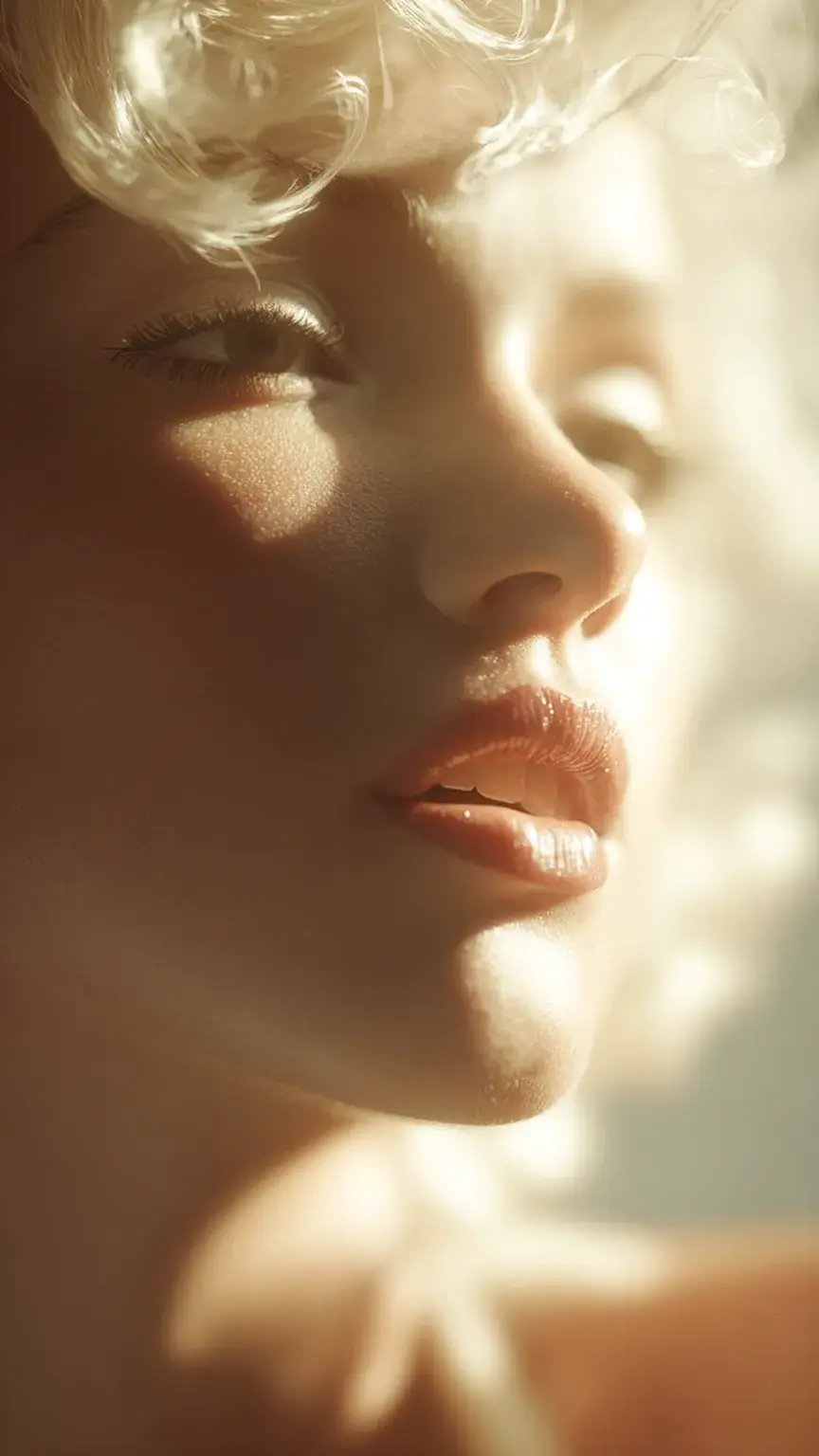
The first secret of the 1950s Marilyn Monroe makeup is the skin. Marilyn famously avoided the sun. She wanted a porcelain canvas that would act as a reflector. But she hated the “dusty” look of heavy powder. To achieve her signature glow, she and Whitey used unconventional methods.
They applied layers of hormone creams and Vaseline under her foundation. Sometimes, they even used fine coats of wax. This created a dewy, almost translucent quality. When the studio lights hit her cheeks, the skin reflected a soft, humid radiance. This made her appear incredibly youthful and fresh.
For the modern woman, this is a lesson in self-acceptance. The 1950s Marilyn Monroe makeup reminds us that “perfection” is often cold. True beauty lives in the texture. It lives in the way your skin reacts to the environment. Even if we don’t use Vaseline today, we can embrace the “glow” as a symbol of our own vitality.
The Iconic Red Lips: A Study in Dimension
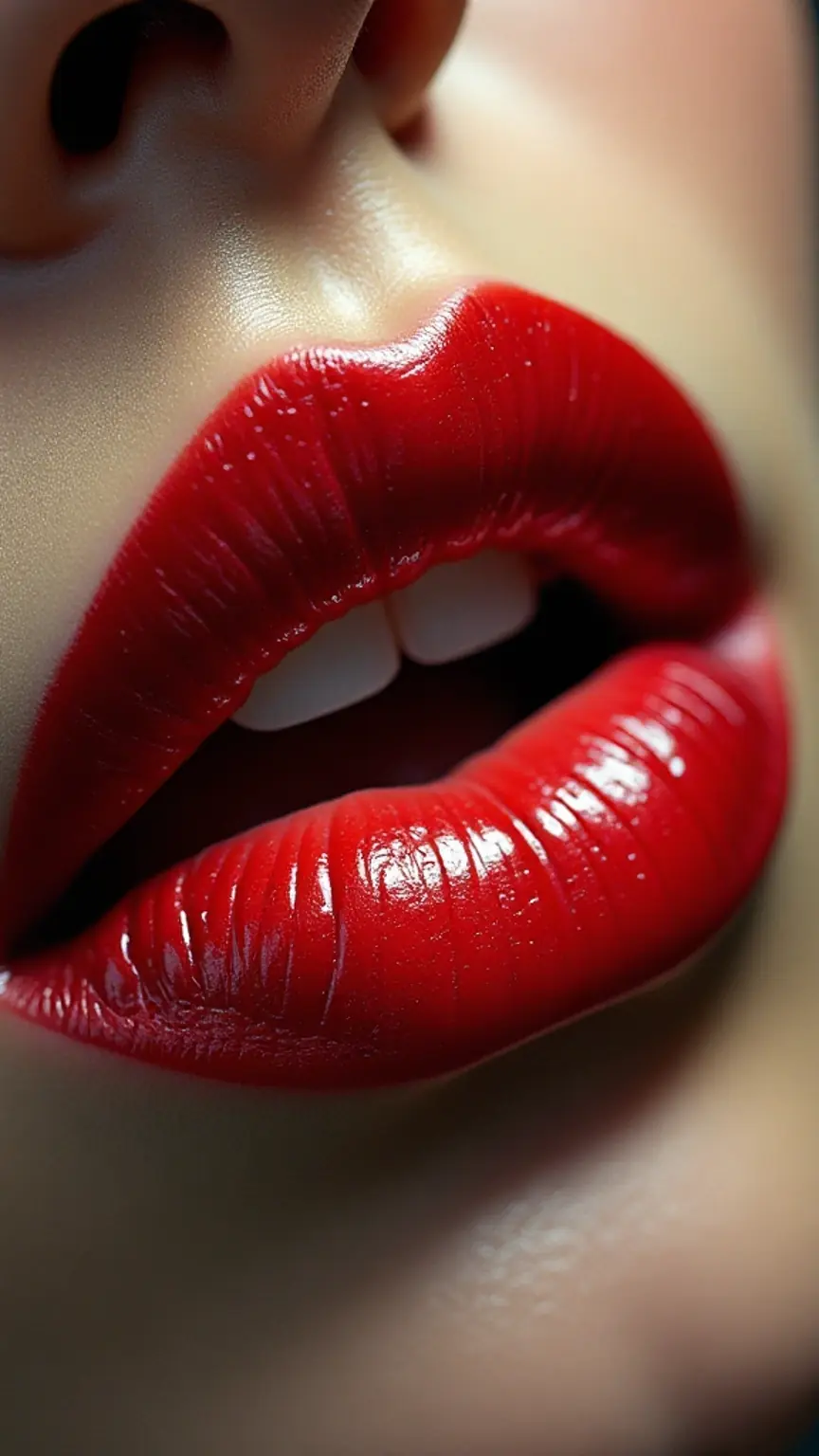
No discussion of the 1950s Marilyn Monroe makeup is complete without the lips. Her red lip was not a single product. It was a complex architecture of color. Whitey Snyder used as many as five different shades of red and gloss to create depth.
He would apply darker reds on the outer corners. He then used lighter, brighter tones in the center. This technique, a precursor to modern “ombre” lips, made her mouth appear fuller and more three-dimensional. A touch of white highlighter on the cupid’s bow and the lower lip added a final “pop” of light.
The red lip was her signature, but it was never a shout. It was a statement of presence. In the 1950s Marilyn Monroe makeup language, red meant “I am here.” It was a color of agency and confidence.
Soft Eyes and Structured Lashes
Marilyn’s eyes were designed to look “sleepy” yet inviting. This was achieved through a very specific application of the 1950s Marilyn Monroe makeup. Whitey avoided heavy, dark shadows. Instead, he used neutral tones—whites, silvers, and soft browns—to open up the lid space.
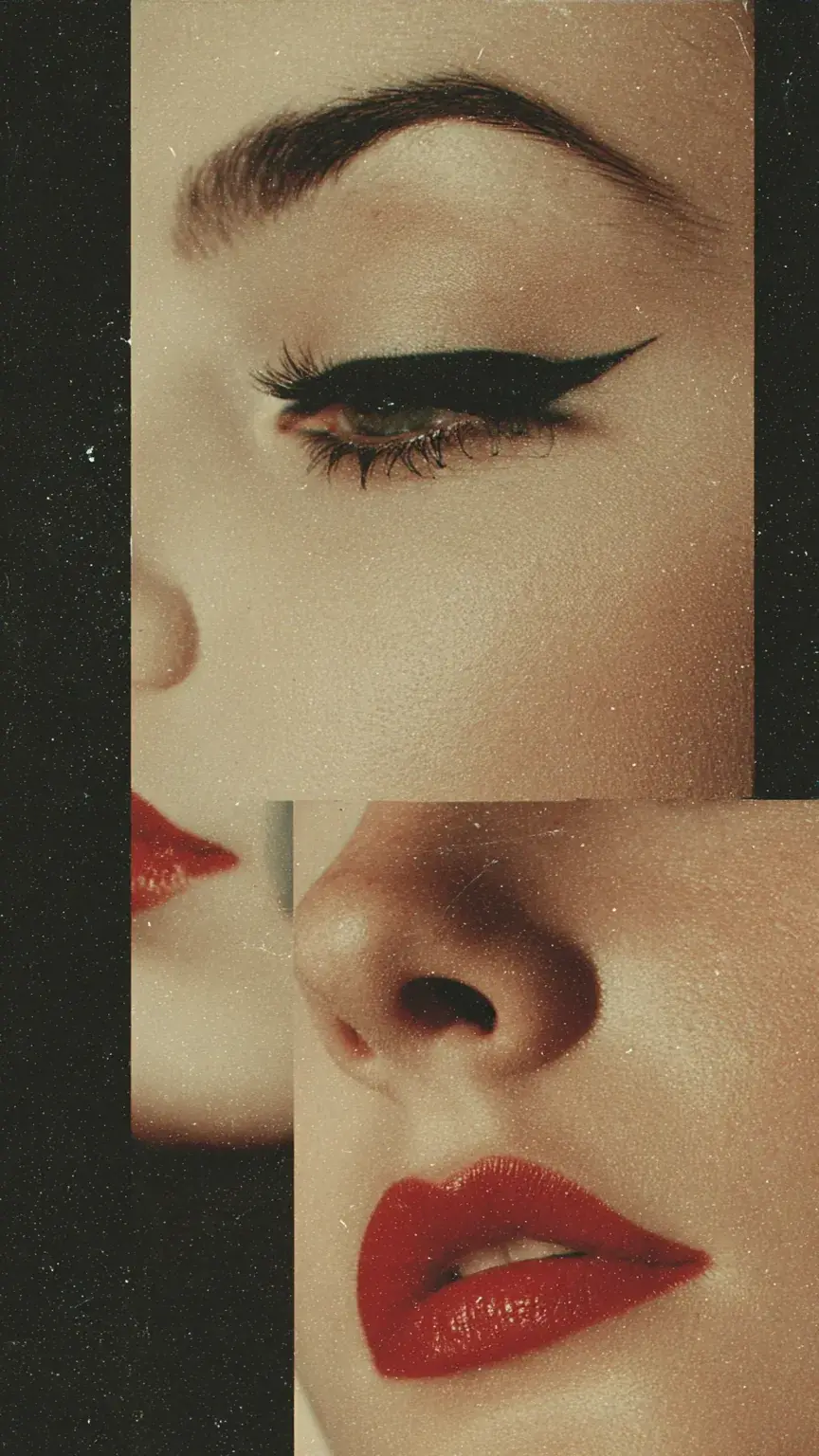
The real magic was in the eyeliner. He used a combination of brown and black pencils. He drew a small “shadow” triangle at the outer corner of the lower lash line. This mimicked the look of long, heavy lashes casting a shadow on the cheek. It gave her gaze a perpetual sense of softness.
She also wore “half-lashes” on the outer corners of her eyes. This elongated her eye shape without making the makeup look too heavy. The result was a look that felt natural yet elevated. The 1950s Marilyn Monroe makeup eye technique was about creating a mood, not just a line. It was a gaze that invited the viewer in.
Eyebrows, Beauty Marks, and the Power of Detail
The details of the 1950s Marilyn Monroe makeup were never accidental. Her eyebrows were peaked to create a sense of perpetual surprise and openness. They were groomed but not thin. They provided a frame for her expressive face. She understood that the brow is the emotional anchor of the face.
Then, there was the beauty mark. Marilyn had a natural mole on her cheek, but she chose to emphasize it with a dark pencil. This turned a “flaw” into a signature. It was a deliberate choice to be recognizable. In the world of 1950s Marilyn Monroe makeup, a tiny detail could become a global icon.
These small choices show a woman who was in control of her image. She knew that the human eye looks for patterns. By repeating these details, she made her face unforgettable. She turned her identity into a visual ritual that the world could follow.
Makeup as a Daily Ritual of Self-Care
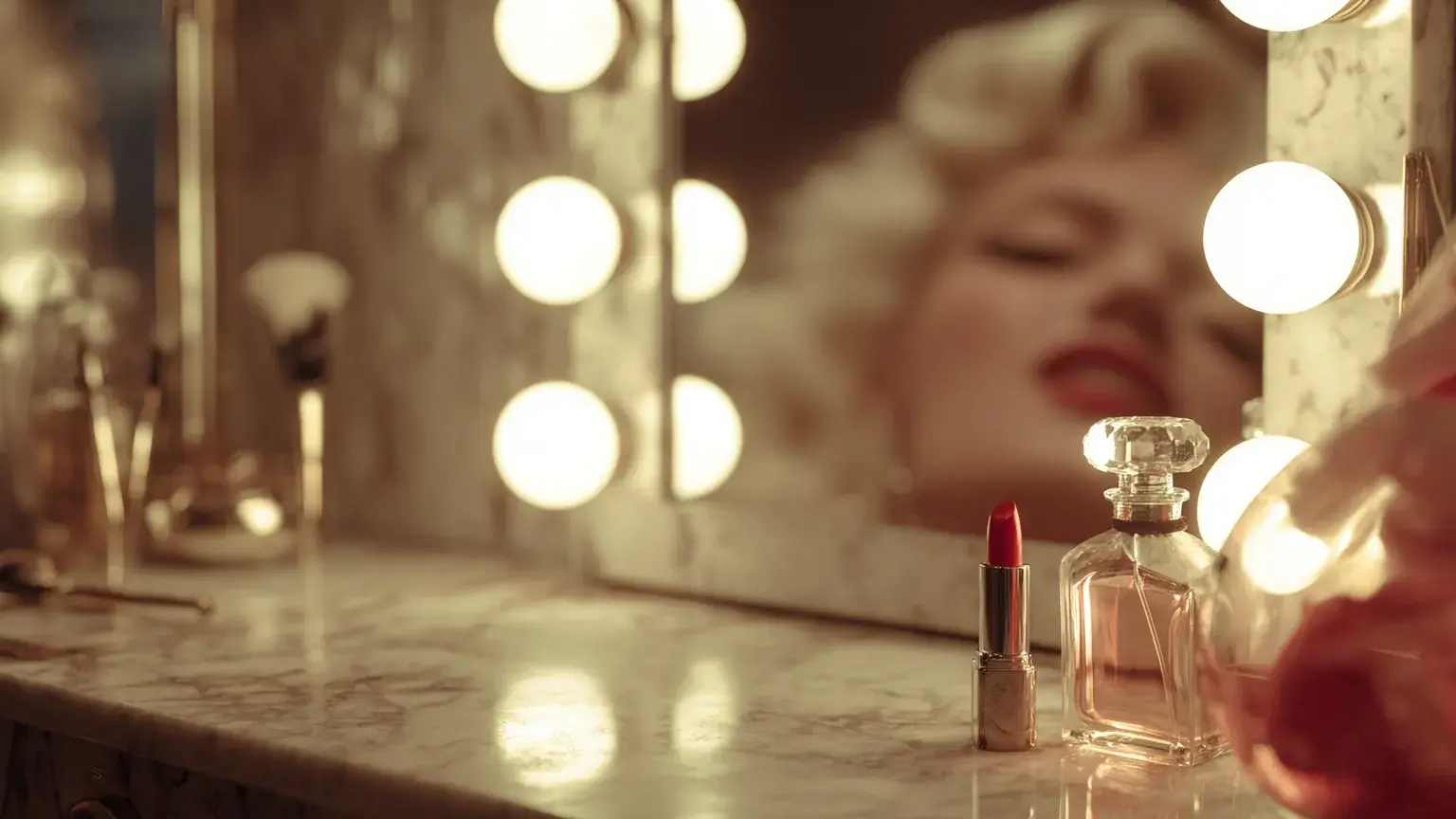
For Marilyn, the process of getting ready was not a chore. It was a transition. She was known for taking hours to prepare. This was not merely vanity. It was a meditative process. The 1950s Marilyn Monroe makeup was a ritual that allowed her to step into her power.
In the quiet of her dressing room, she could ground herself. She could watch her own transformation. This “mirror time” was a space where she was in charge. In a life where she was often told what to do, her makeup was her own territory. It was a form of mental preparation for the world outside.
We can reclaim this today. We can view our morning routine through the lens of the 1950s Marilyn Monroe makeup. It is not about “fixing” ourselves for others, but about taking a moment to honor our own presence and anointing ourselves for the day ahead.
How to Channel Marilyn Today (Without Imitating)
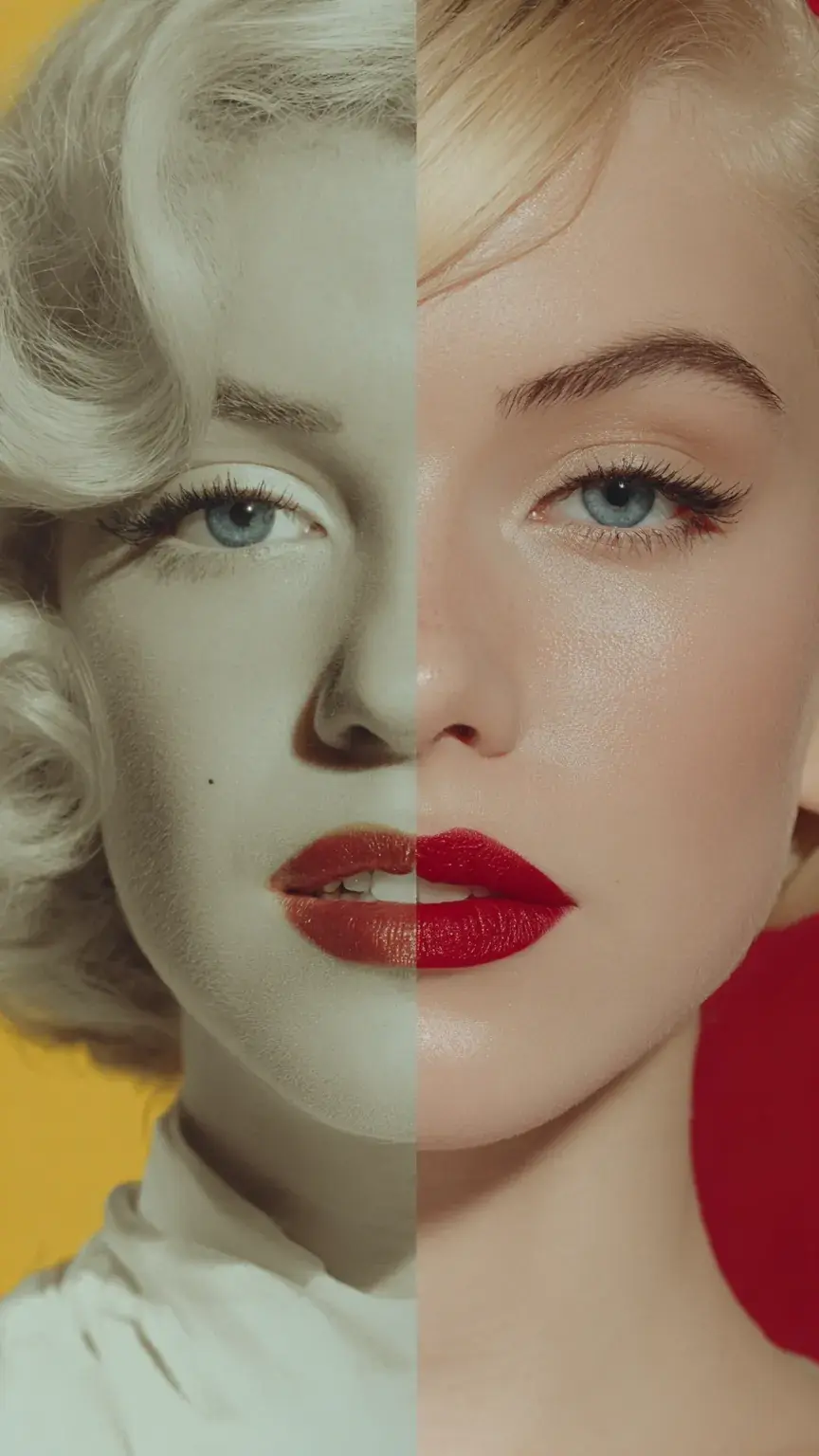
You do not need five shades of lipstick to capture the spirit of the 1950s Marilyn Monroe makeup. You simply need the intention. To channel this look today, focus on the relationship between light and shadow.
Start with a luminous base. Choose products that let your real skin breathe. Instead of a heavy contour, use a soft highlighter on the high points of your face. For the eyes, keep it simple and focus on the “flick” of the outer lashes. And when you choose a red lip, choose a shade that makes you feel brave.
The goal is not to look like a 1950s costume. The goal is to feel “present.” The 1950s Marilyn Monroe makeup look is a tool. Use it to highlight your own story. Take the elements that resonate with you—perhaps the glow, or the structured brow—and make them your own.
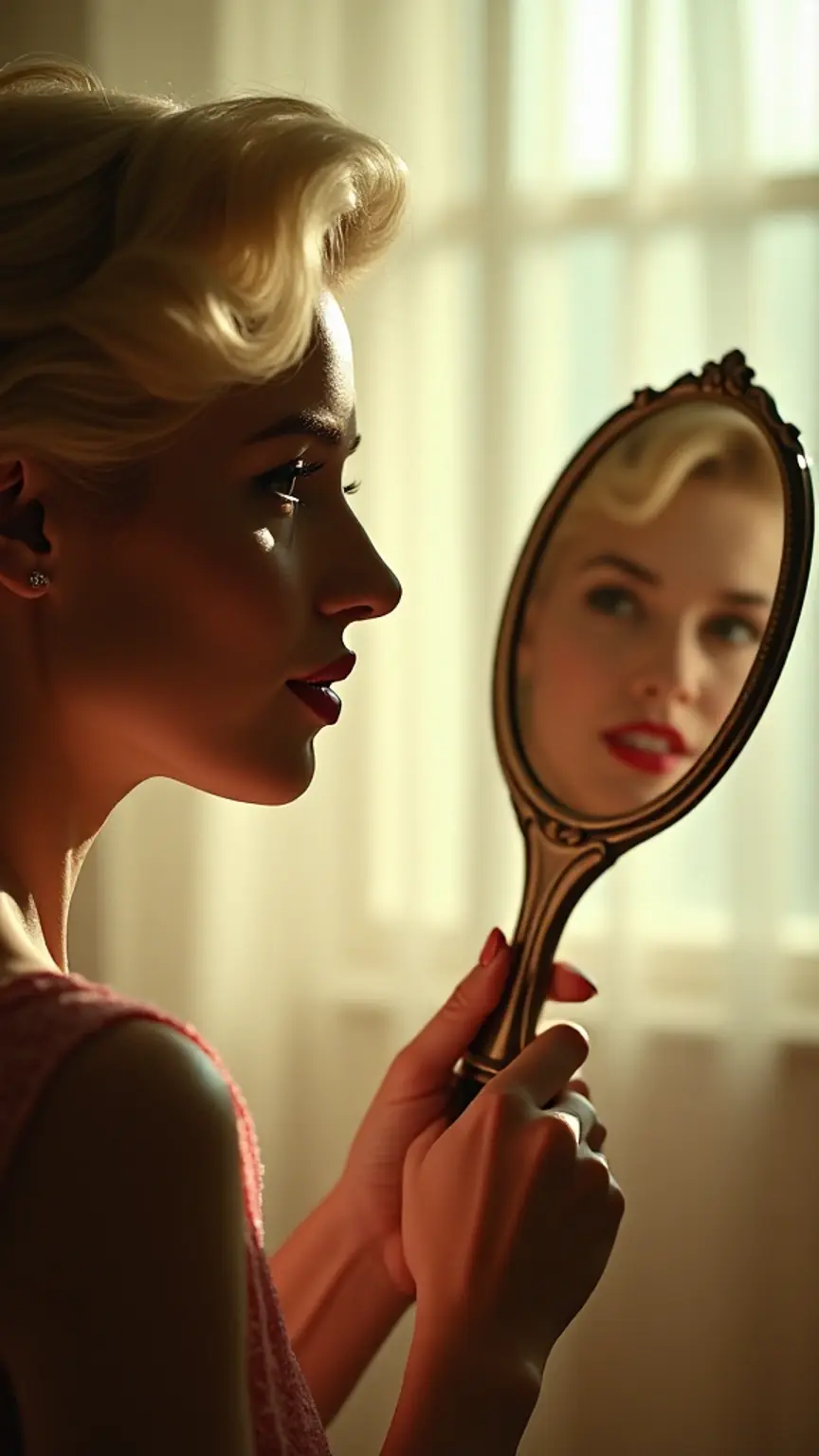
The Mirror as a Place of Reflection
When you stand in front of the mirror, what do you see? Do you see a list of things to change? Or do you see a person preparing for a journey? The 1950s Marilyn Monroe makeup encourages us to look with kindness.
Marilyn used her reflection to find her strength. She looked for the light. She focused on what she could amplify. This is a profound shift in perspective. It moves beauty away from performance and toward self-connection. In our “activity book,” we explore this shift deeply. We invite you to find your own “signature” and to view your face as a landscape of light.
When do you feel most like yourself? Is it with a bold lip, or with bare skin? There is no wrong answer. The secret of the 1950s Marilyn Monroe makeup is that it was a choice. It was a way for a woman to say, “This is how I choose to be seen.”
In the pages of “52 Marilyn Moments,” beauty becomes a moment of reflection—not a performance. It is a space to reconnect with how you want to feel, not just how you want to appear. You are the artist of your own presence. Your light is your own.